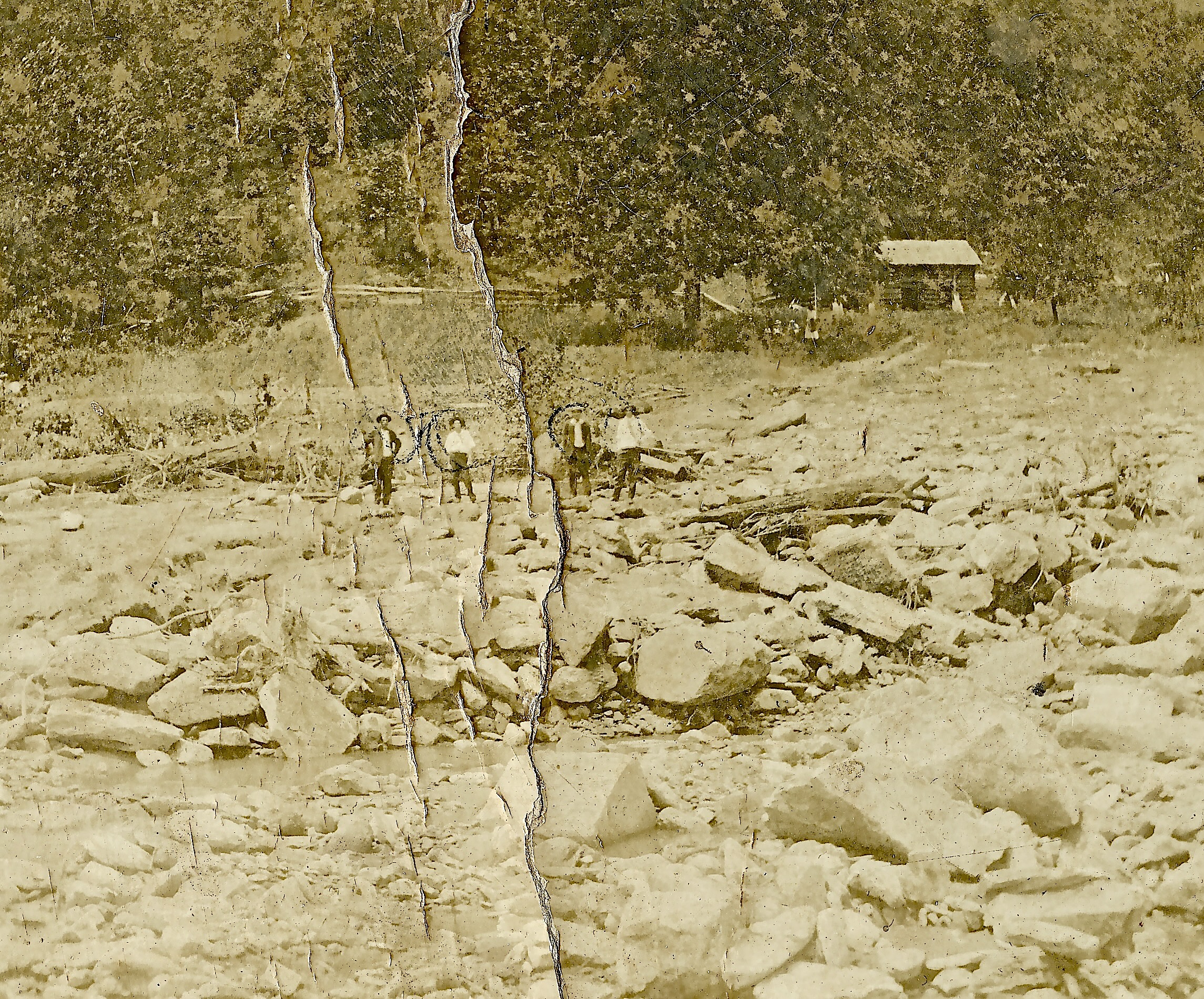
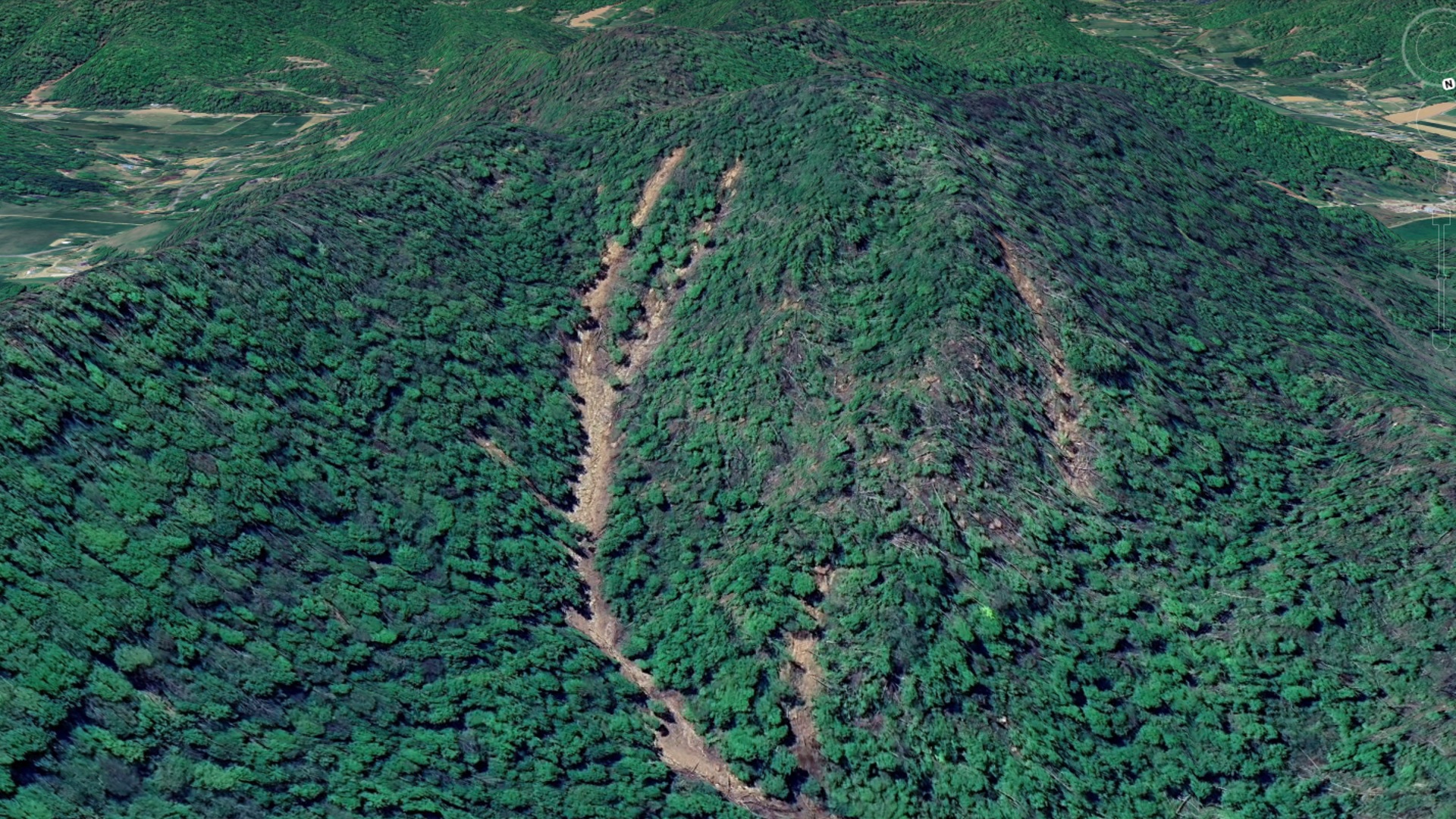
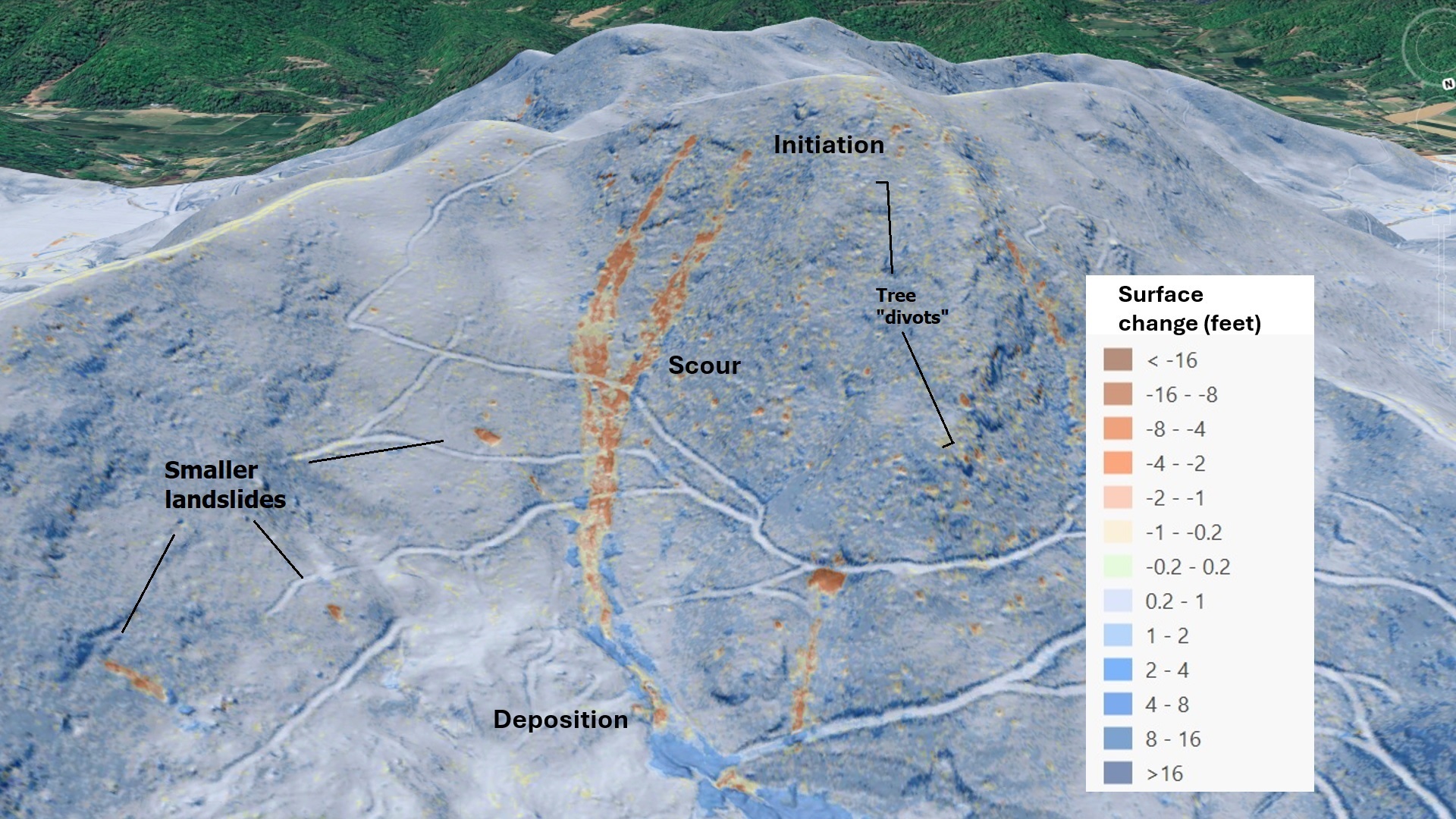
The 1847 debris flow event in Clay County, North Carolina shows crazy storms aren’t a new thing for the region

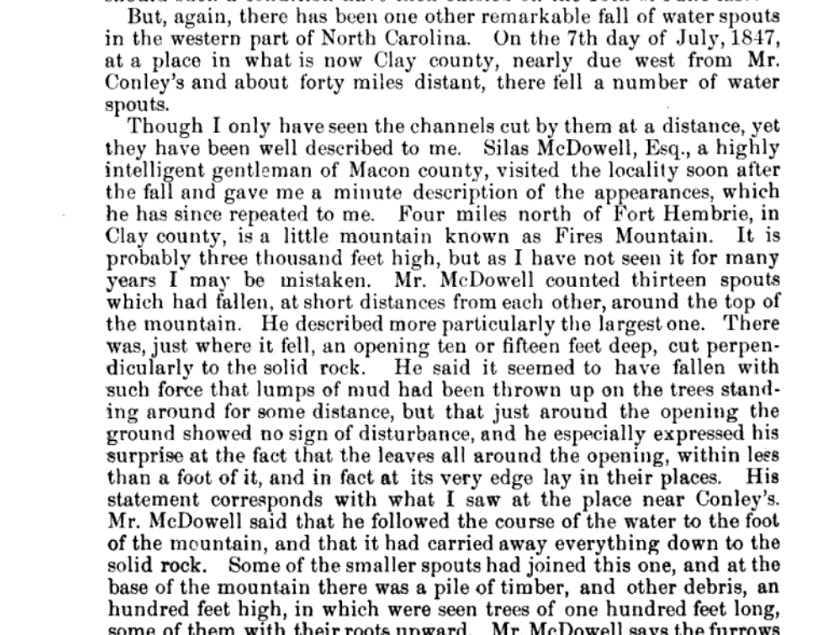
Seeing the results of past extreme storms in a region is an important part of understanding potential landscape behavior. Thomas L. Clingman (yes, that Clingman) provides an invaluable record of a couple of past storm events in his extensive writings about western North Carolina. His discussion of the results of a storm of July 7th, 1847, in Clay County is particularly interesting. The document is linked here, but the excerpt below contains the important parts found on page 76 of the document. Anyone that saw the effects of a Helene debris flow will quickly recognize exactly what Silas McDowell described to Clingman.

McDowell was very clearly describing debris flows to Clingman (not “waterspouts” as we use the term today), and Fires Creek Mountain was obviously hit with an impressive cluster of them during this storm. Because debris flows visibly scar the landscape, could a geologist still see the effects of the storm on Fires Creek Mountain nearly 180 years later? I took a stab at this a few months ago, and I was impressed at how well the combination of Clingman’s notes and 21st century lidar imagery worked together.

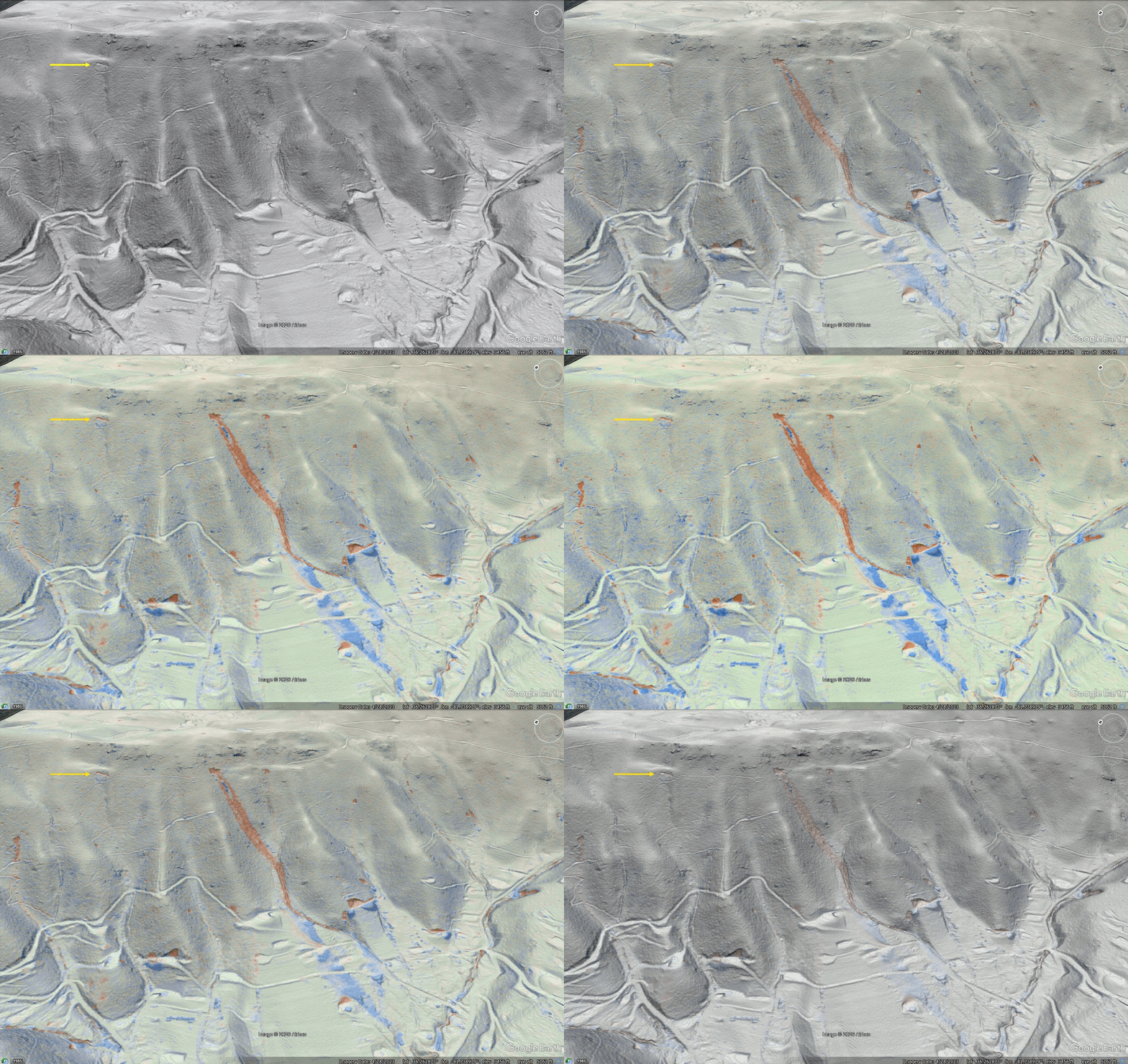
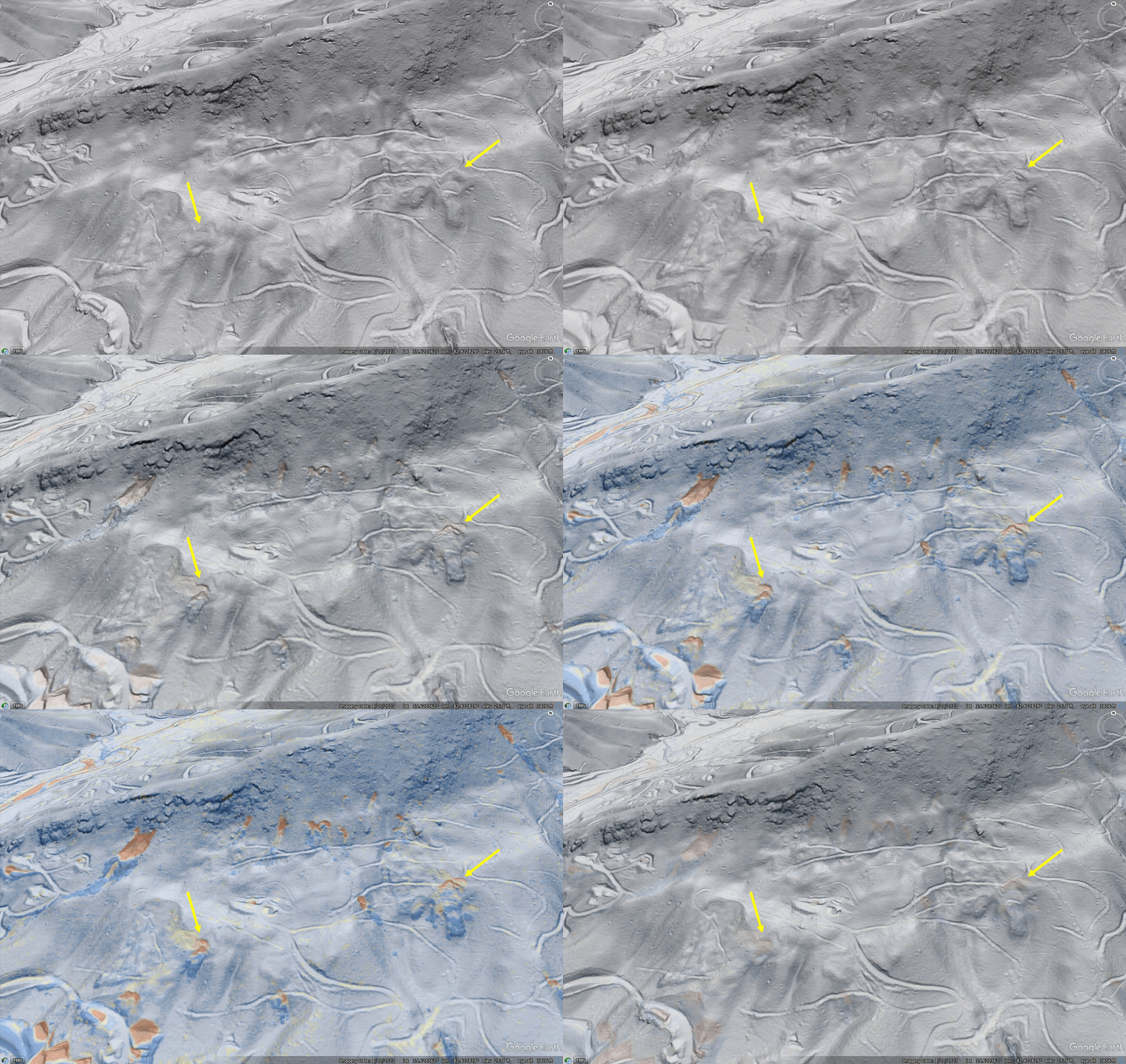
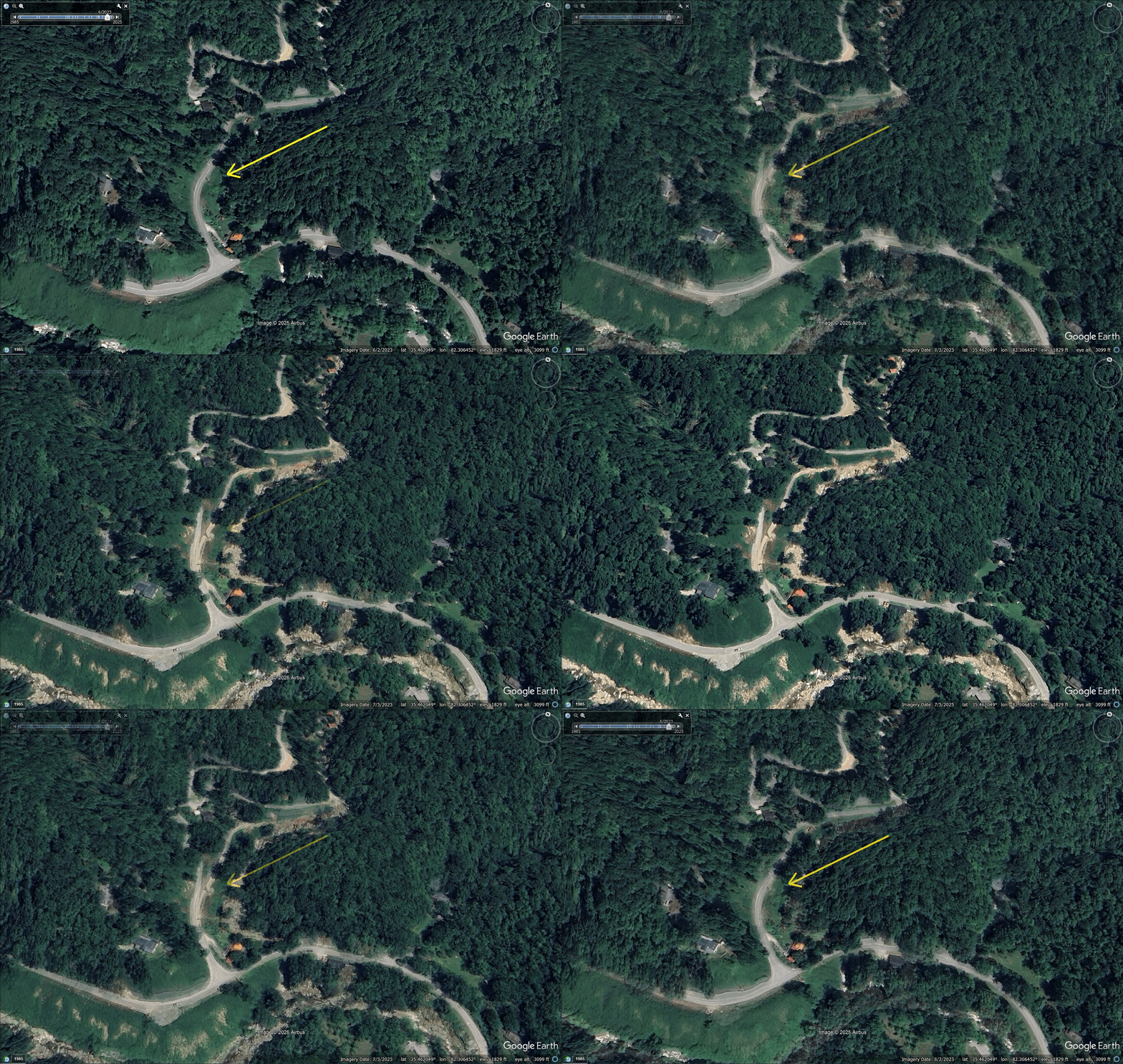
If you want to go looking for 180 year old debris flows, you need to know what sort of scars you might be looking for on mountainsides. An effective way to do this is to examine the lidar-visible scars of known debris flow events. The November 1977 storm produced quite a few debris flows southwest of Asheville in the Bent Creek area. These were captured in 1982 aerial photography when their scars were still visible in the forested landscape. These air photos can be matched to lidar imagery to directly confirm what debris flow scars look like in the landscape. The GIFs below show this process, with yellow arrows indicating the upslope starting points (initiation zones) of the debris flows.

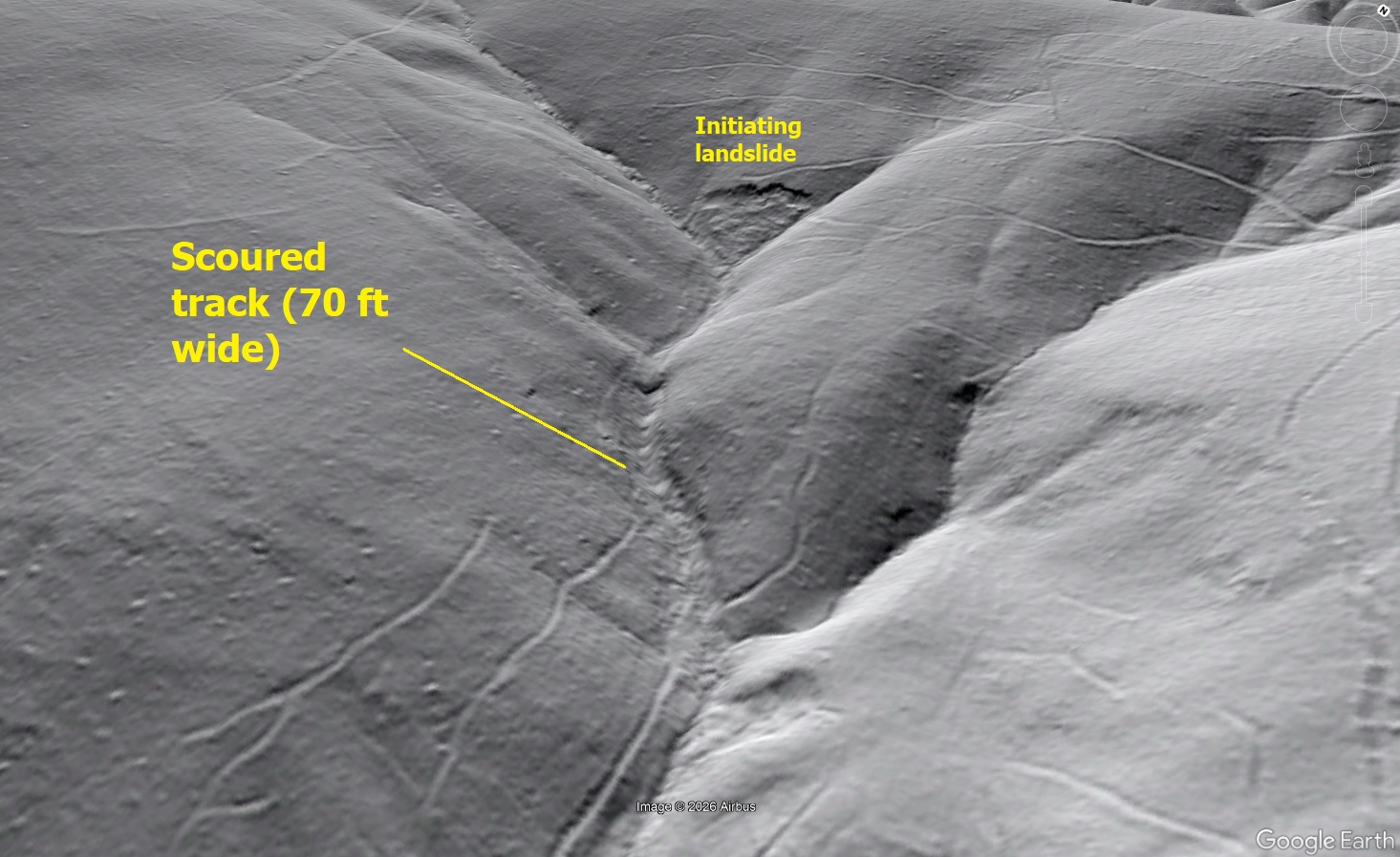
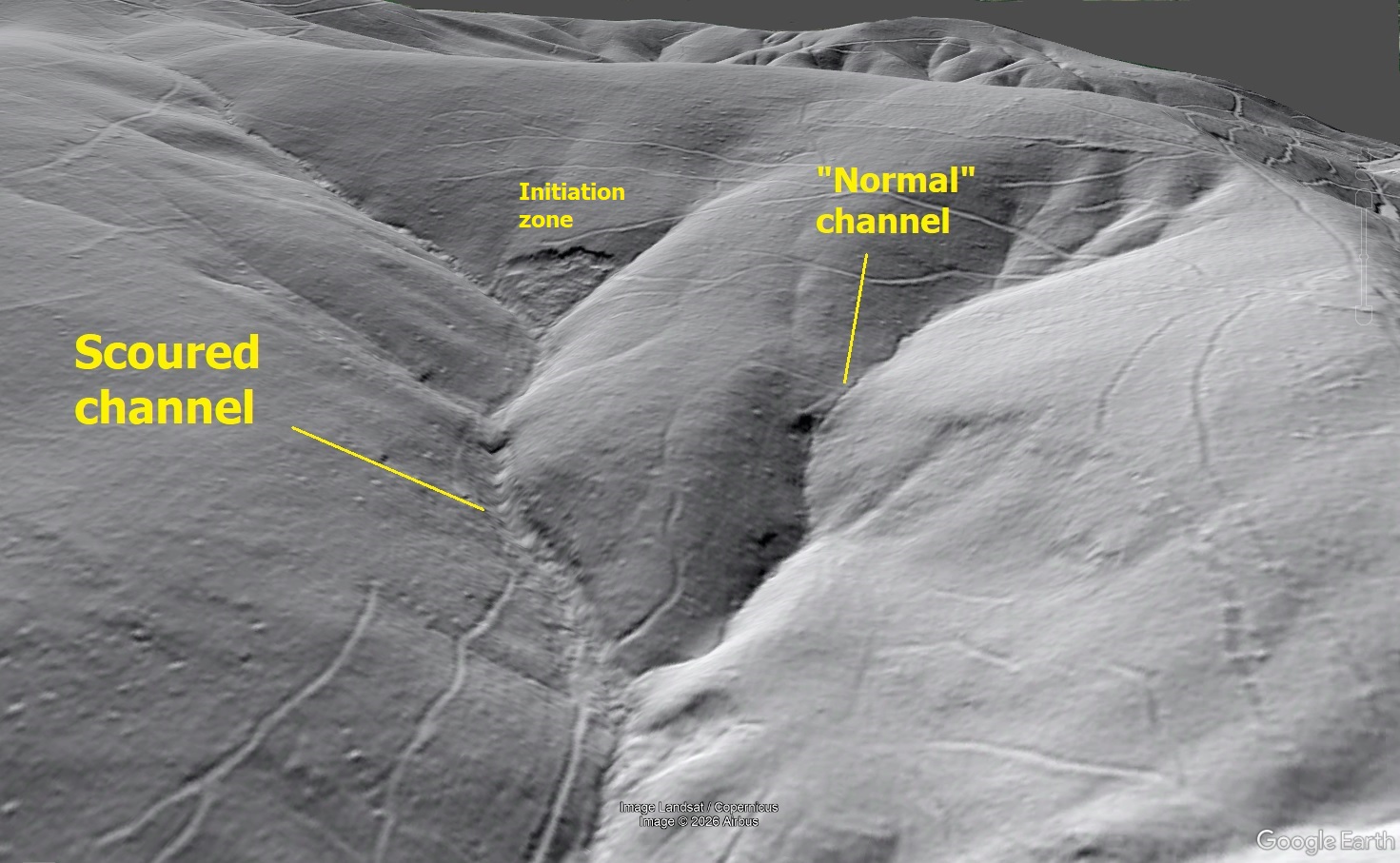
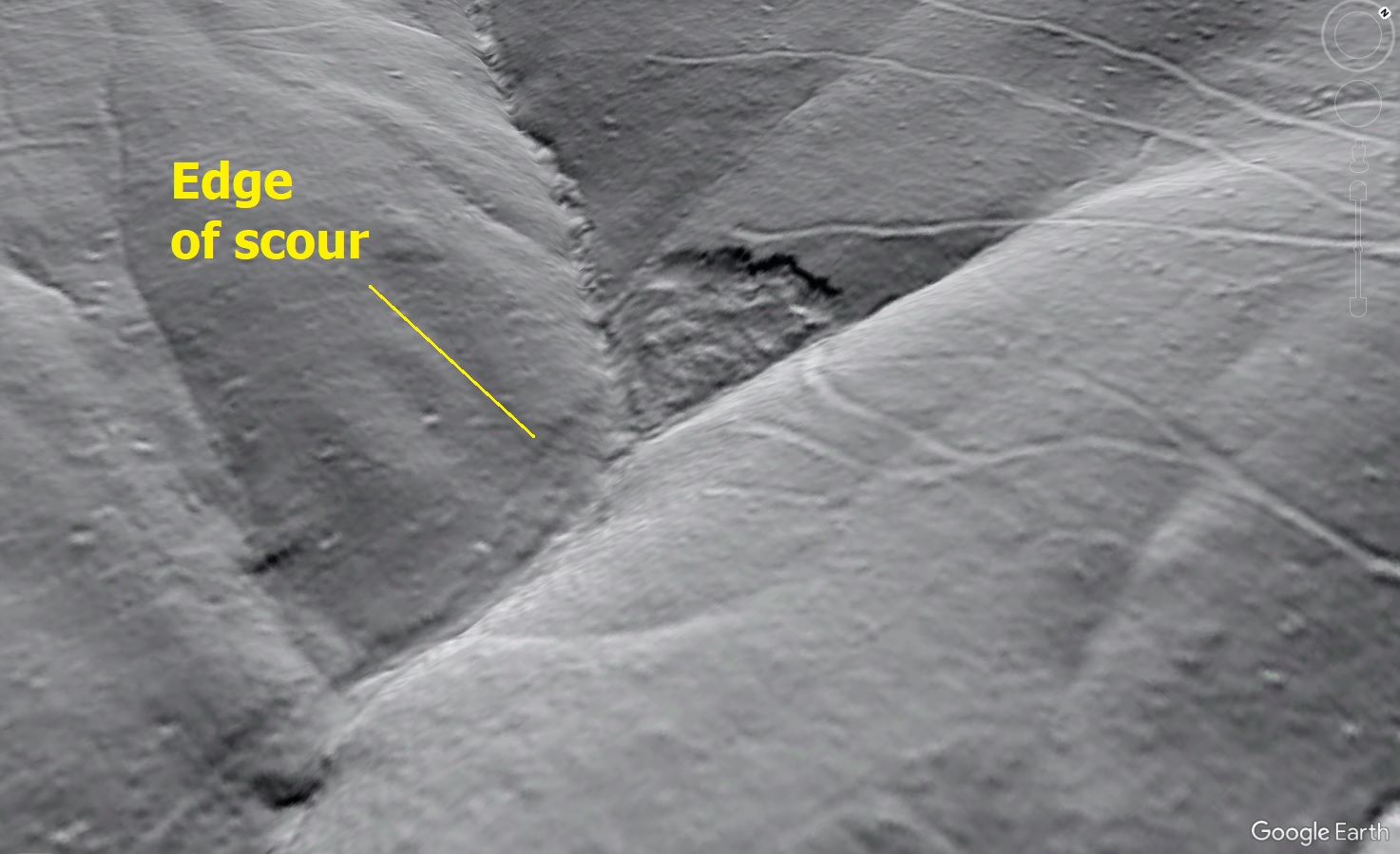
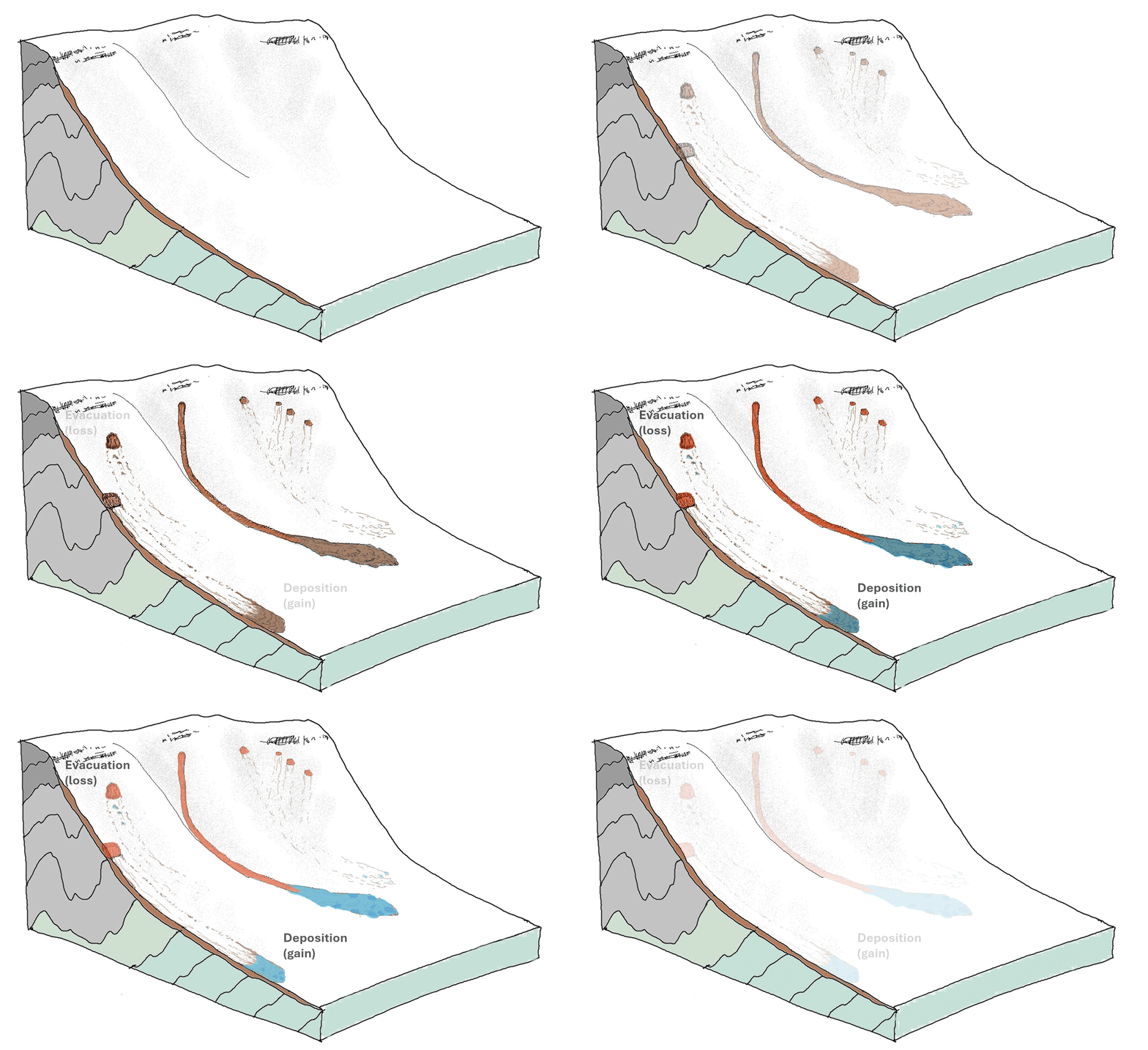
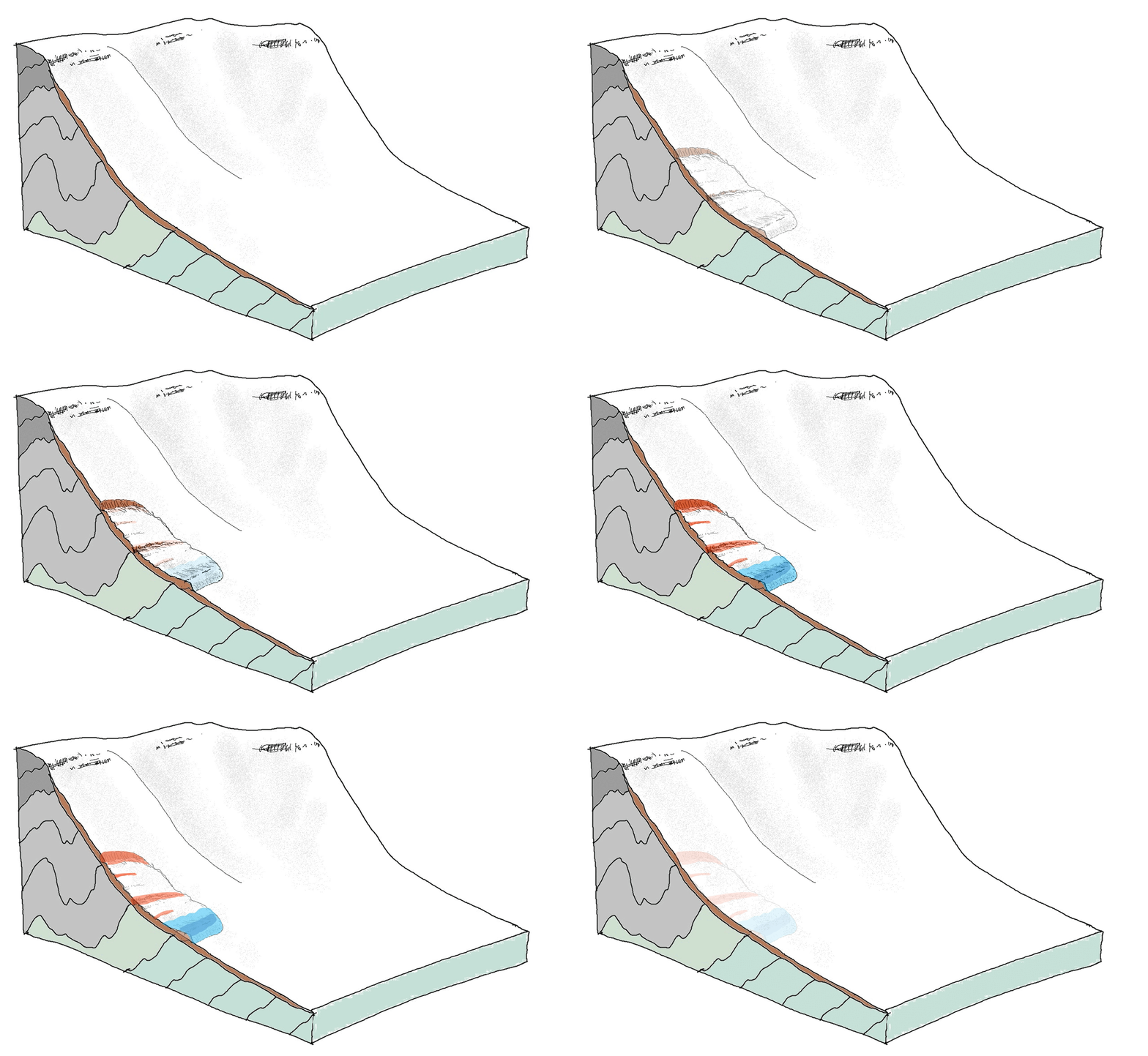
Debris flows like these begin as an initial landslide, producing a distinct scar in the landscape with steep, sharp edges where the slide began. This scar transitions into a visibly scoured track where the debris flow rakes saturated soil from the slope in its path, adding to the flow’s mass. The GIF below gives a general idea of this starting process and the scar that it makes, from the initial slide to the early phases of scour.

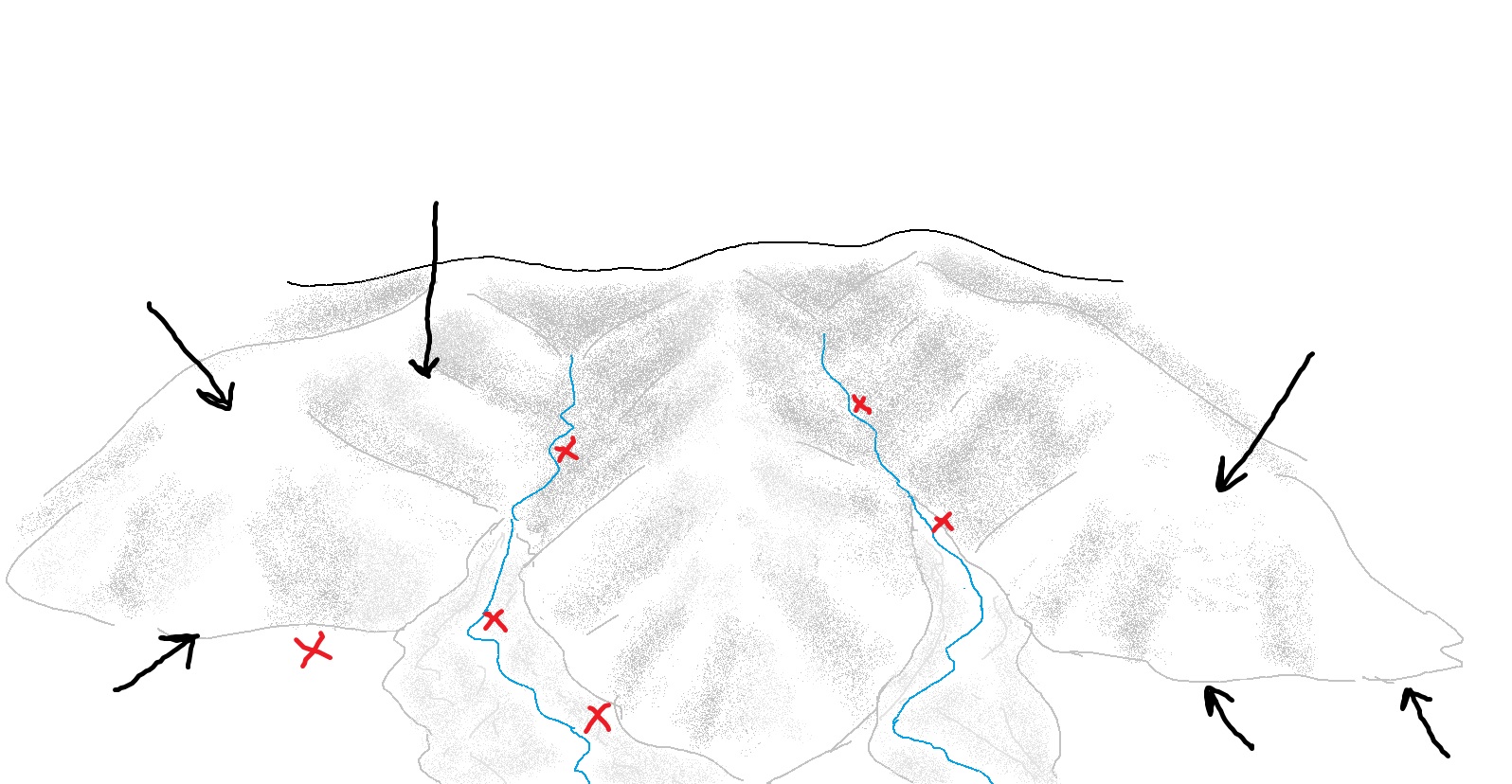
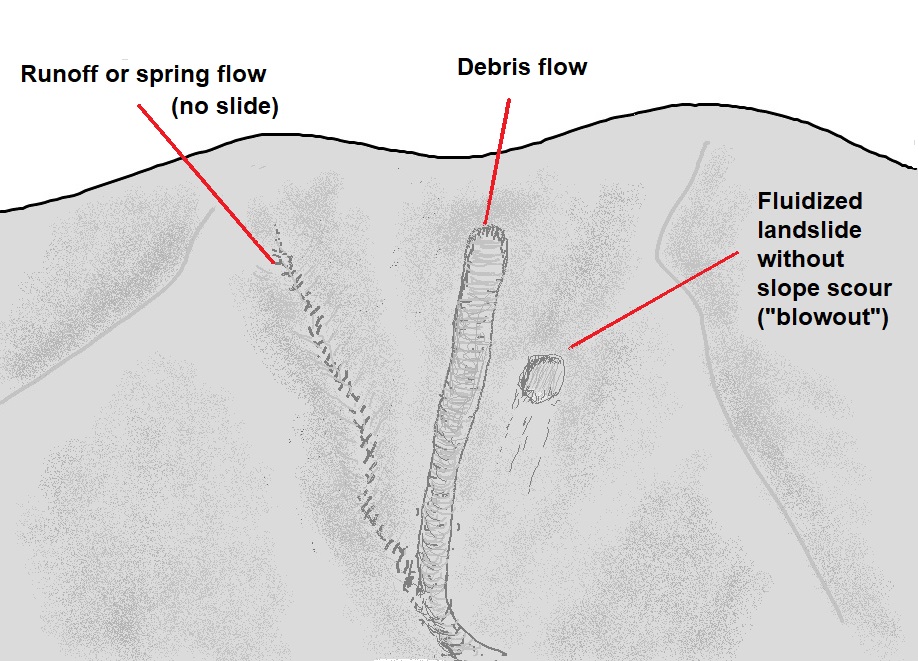
Within the grayscale world of lidar-derived hillshade imagery, debris flow scars can be distinguished from small, water-carved channels due to the effects of the initial sliding and subsequent scouring processes. Fluidized landslides similar to debris flows, but without the long, scoured track (referred to as “blowouts”), also produce distinct scars. The sketch below offers a basic summary of what you’re after as you peruse lidar imagery.

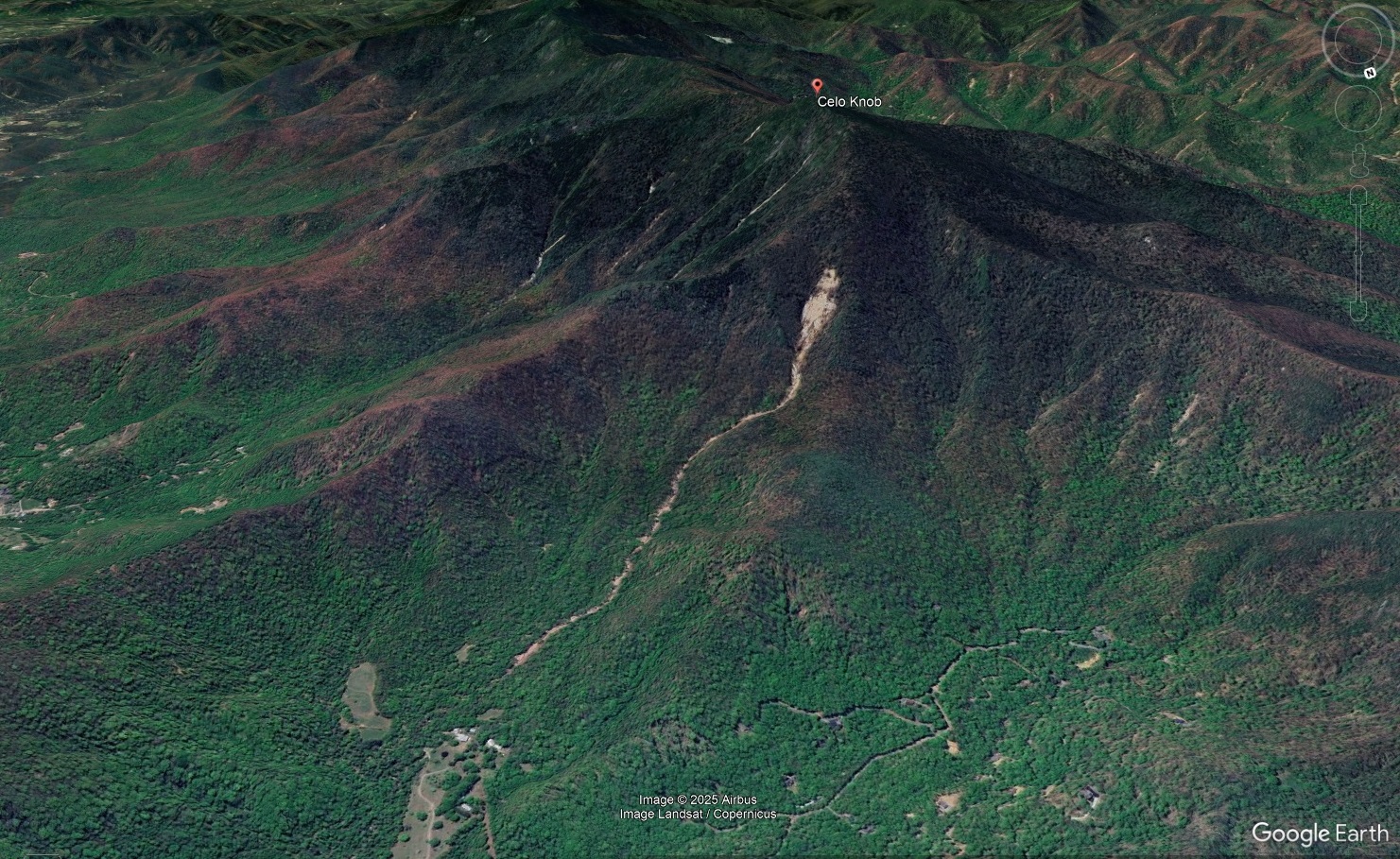
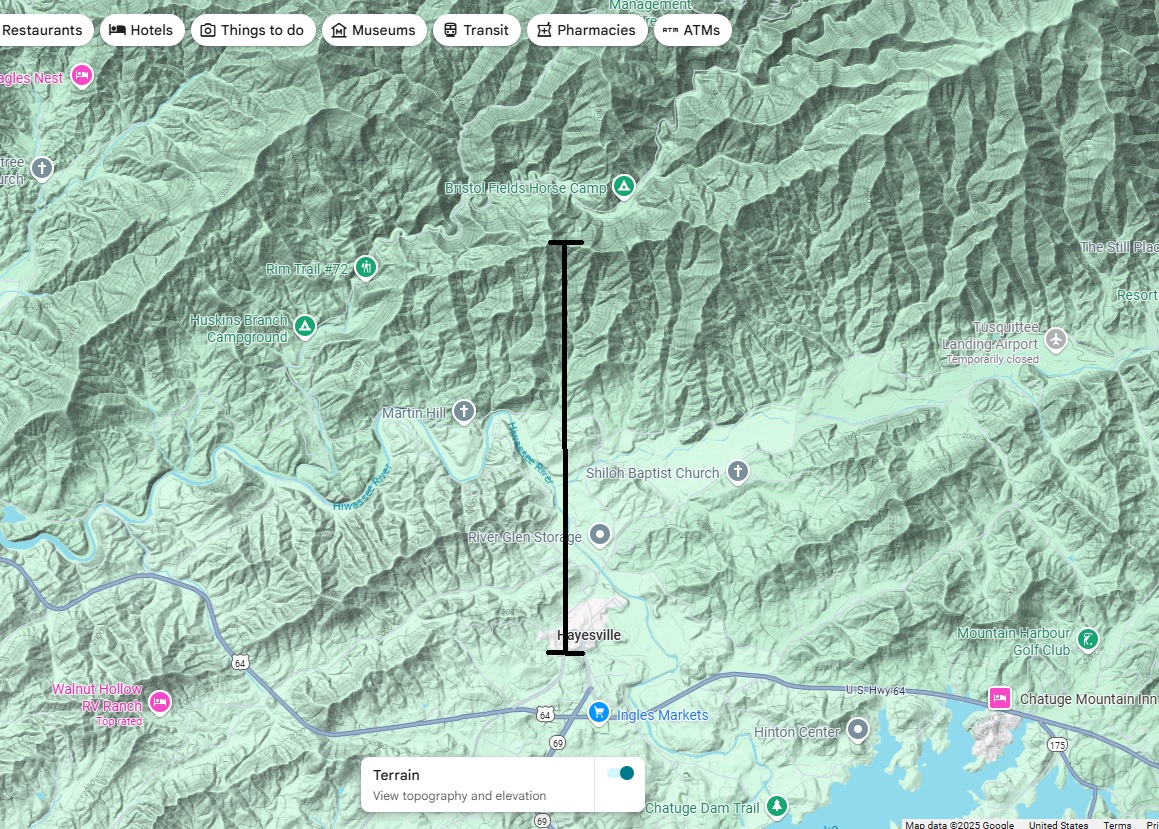
So, with this knowledge in mind, it’s time to take a look at Fires Creek Mountain. Clingman’s geography and distance estimates are always excellent, so I drew a line four miles due north from the Fort Hembree historical marker’s general area. The line met the top of Fires Creek Mountain at about 3.9 miles in a debris flow-susceptible area…not bad. The lidar imagery does the rest.

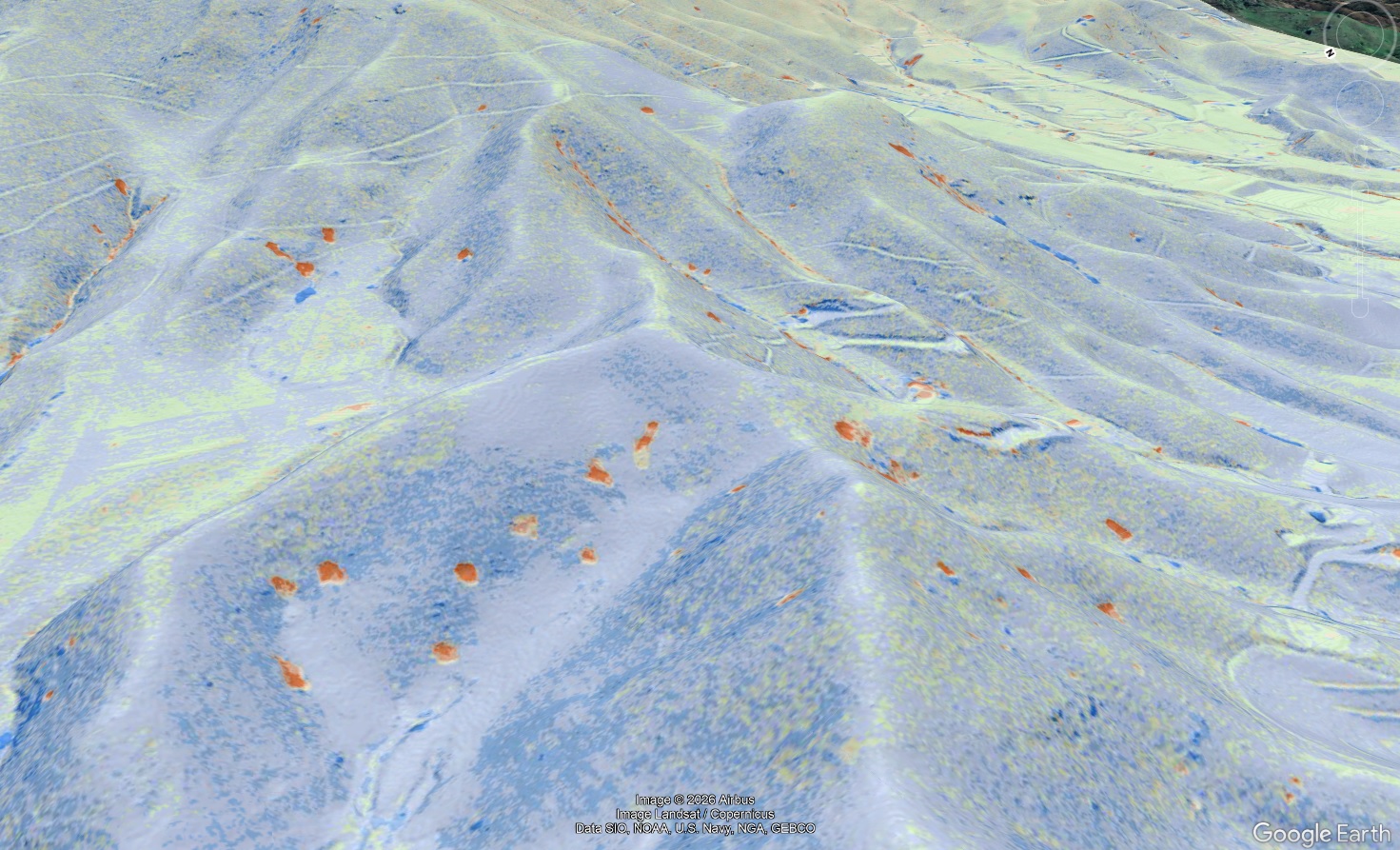
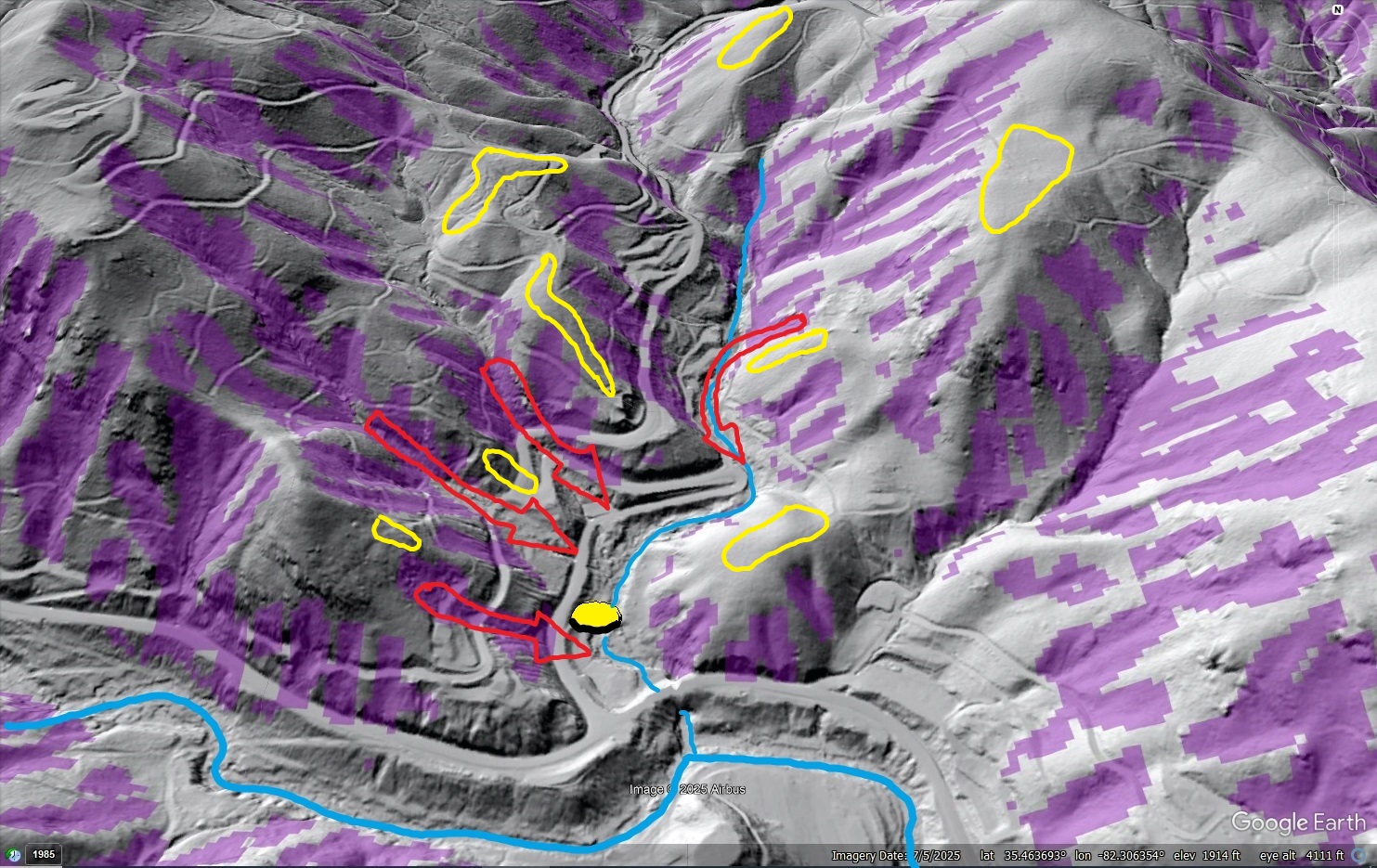
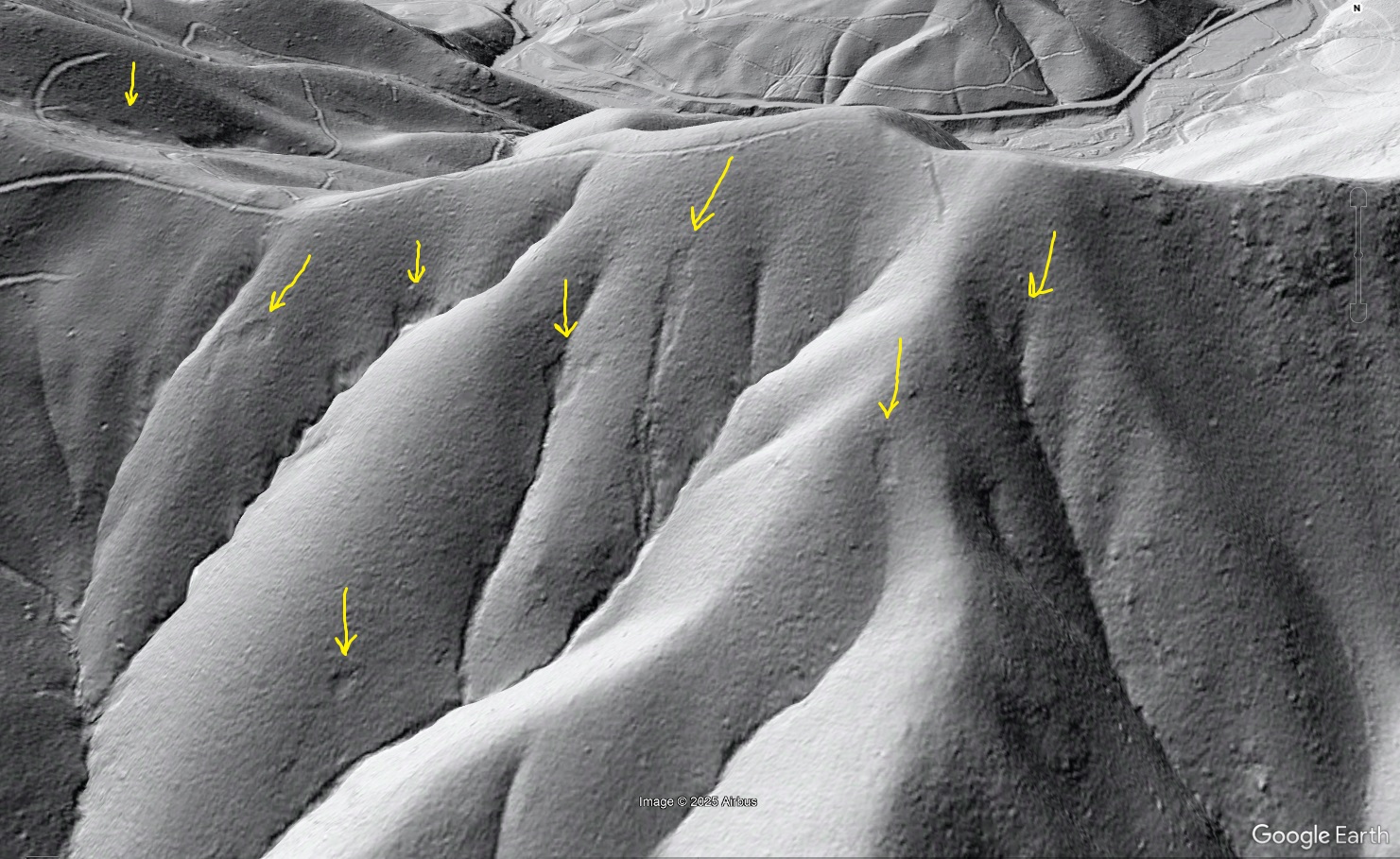
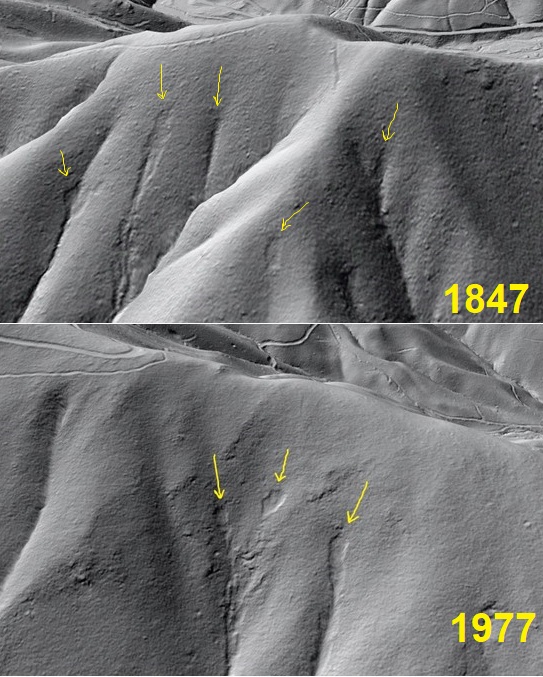
There are indeed an impressive number of debris flow scars on Fires Creek Mountain at the top end of the black line, exactly where they should be. Their appearance is unmistakable, and they distinctly cluster within a limited area as Clingman notes in his report. Yellow arrows point them out below; many more are visible in the zoomed-out view that follows. They aren’t labeled in the large view–see how many you can find.

The scars are well-preserved and look like the 1977 scars, though a bit worse for wear after 180 years.

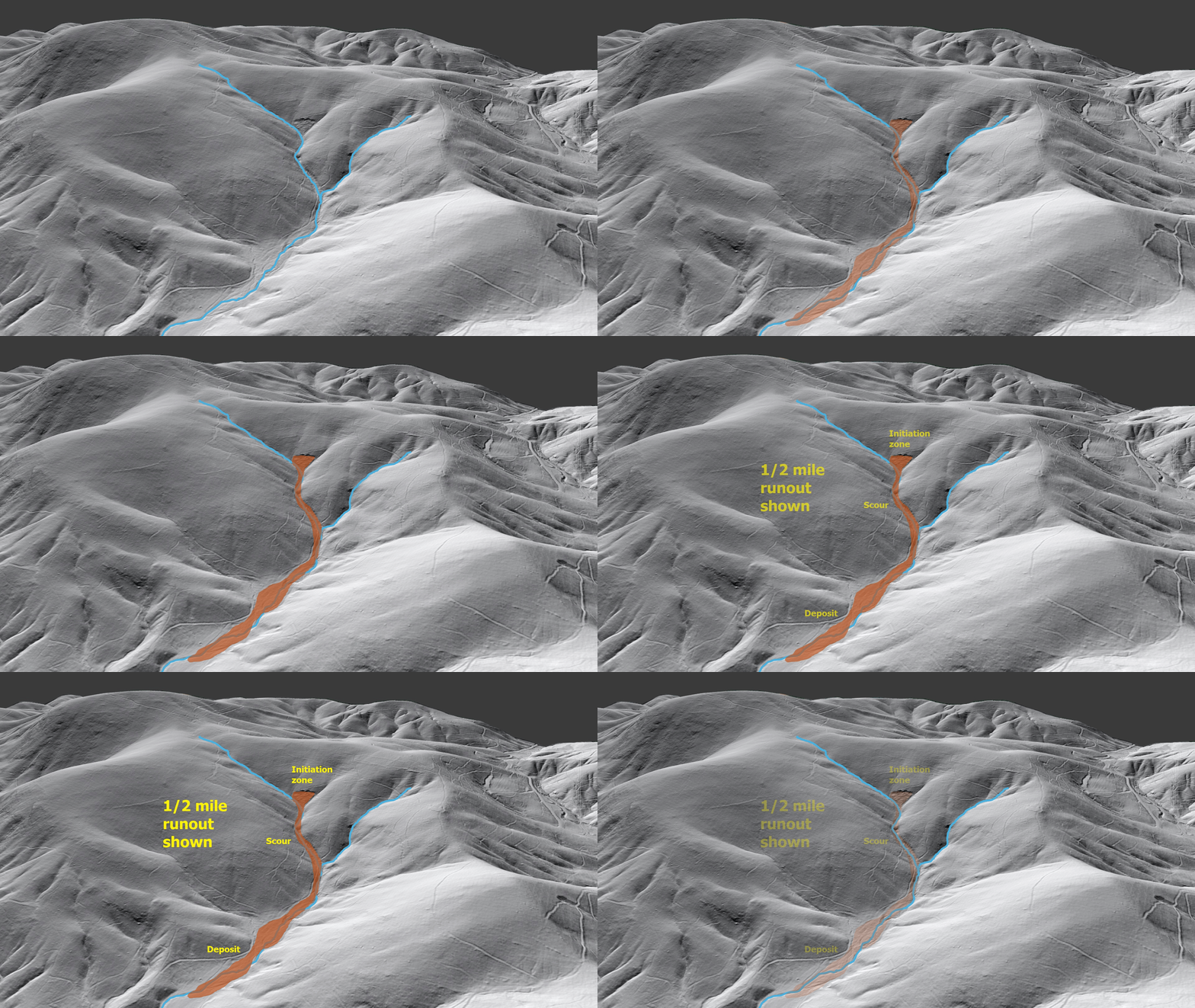
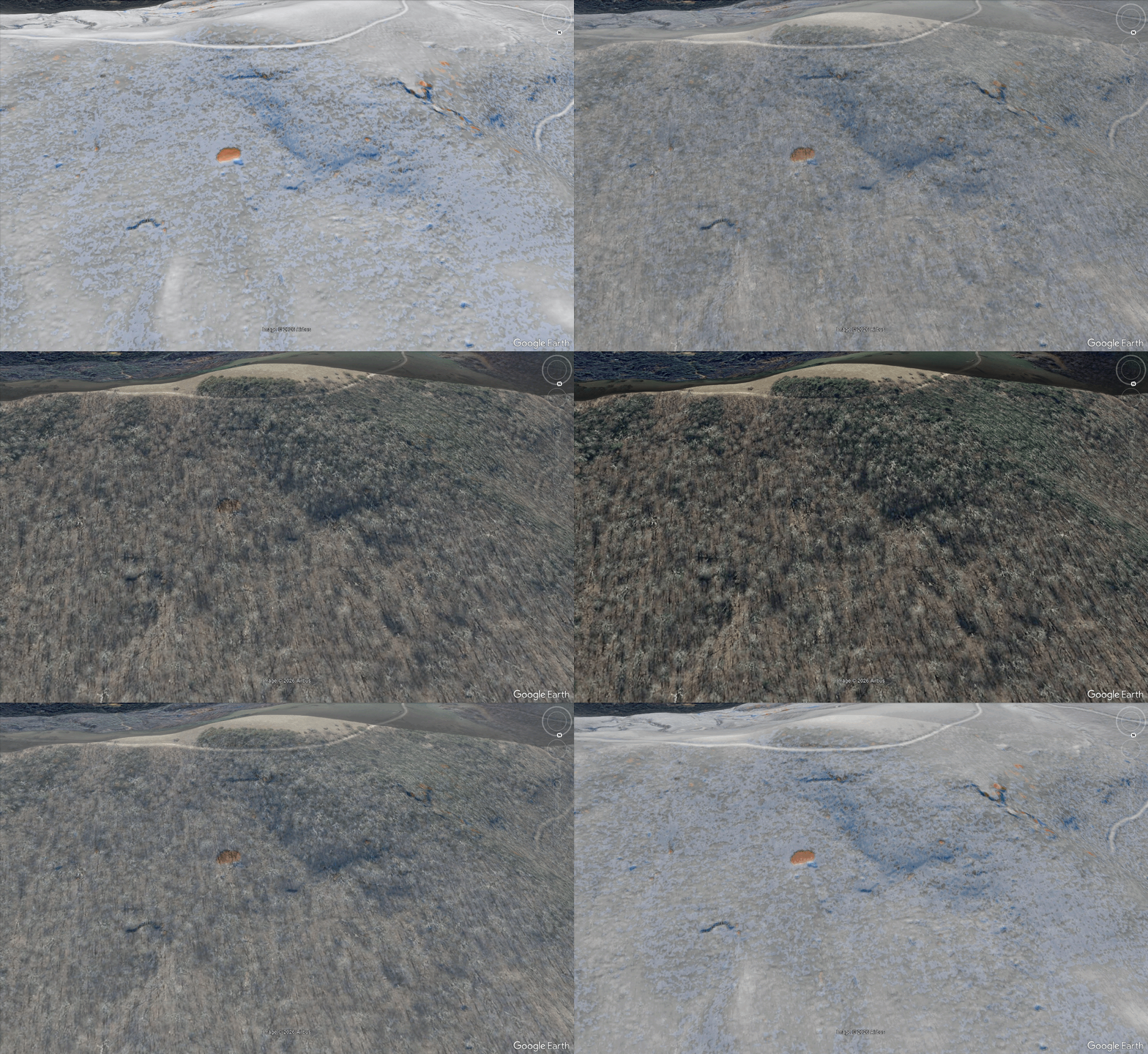
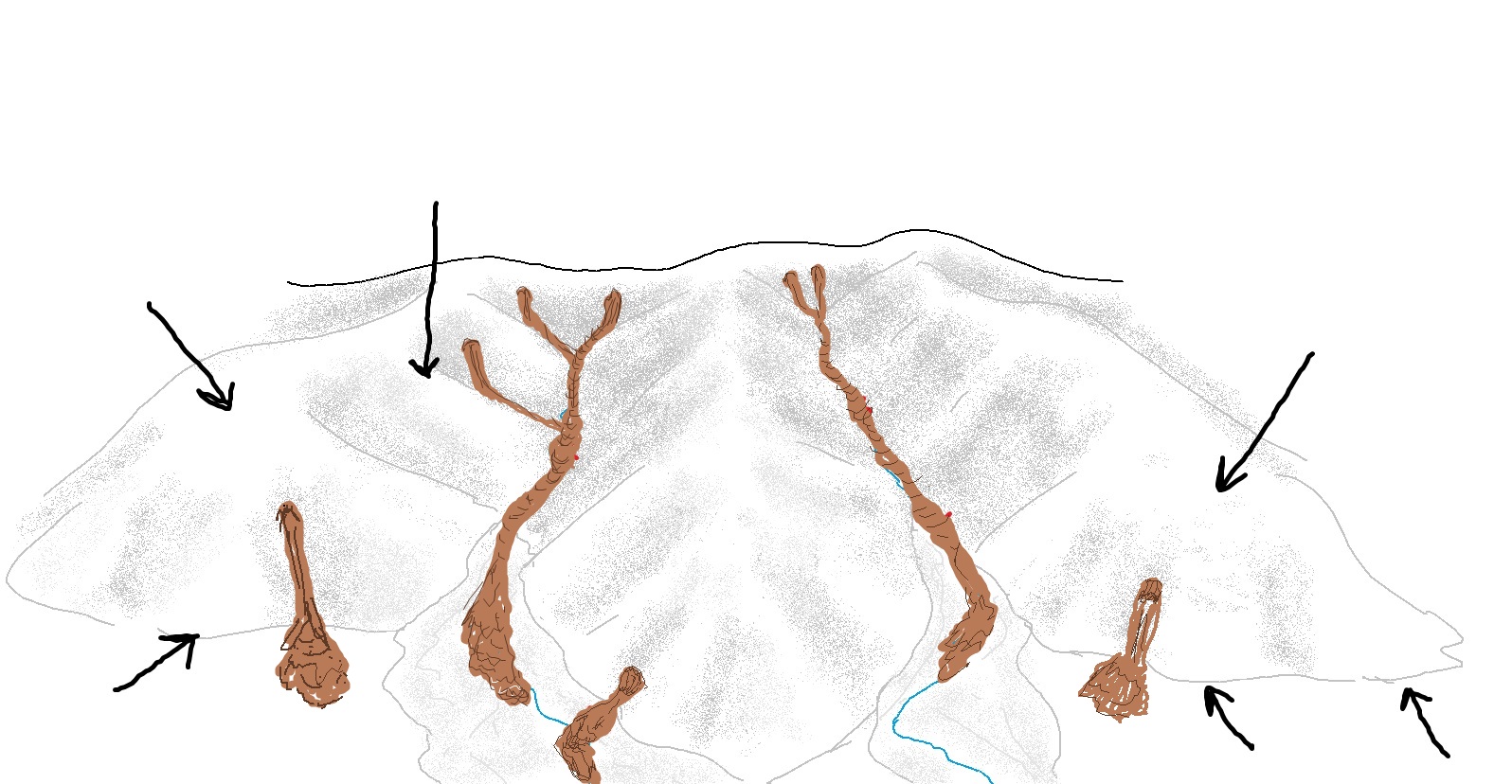
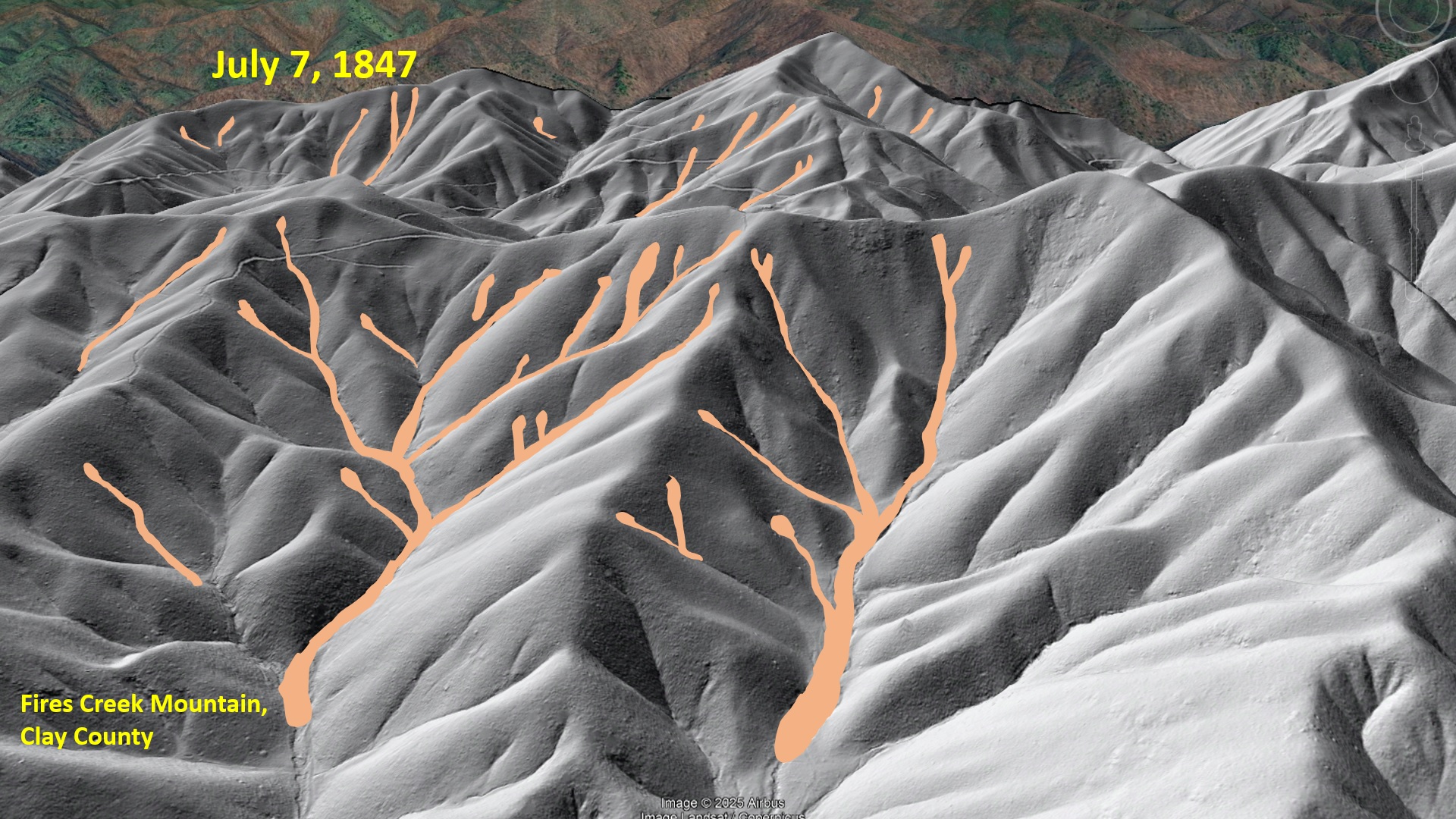
This 1847 storm was likely an isolated storm “stuck” on the mountain ridges, given the limited size of the most intense debris flow activity. Clingman references observers in the valley below watching the storm on the mountain but not experiencing the intense precipitation themselves. Had this storm happened today (or in the era of easy photography, particularly aerial photography), it would have been intensely documented and firmly cemented in local lore. Today, it might make international headlines, particularly if someone caught a video of one of the debris flows reaching the valleys. How readily visible the debris flows and blowouts were from the valley below in 1847 is hard to know, but it was obviously eye-catching enough to have attracted attention and investigation from locals at the time. The images below show brown outlines over the visible features.

Extreme storms are likely to become more common in a warming atmosphere, but they’ve always been a part of the southern Appalachians. Helene’s impacts were exceedingly widespread, but more localized–and more intense–storms have happened in the past and will continue to happen in the future. It’s worthwhile to look back on these events and their impacts as a reminder that all sorts of things can happen in our region when conditions are right.

What happened to mountain slopes during Helene? Geologists are gathering information to prepare for the next storm

The Toodies Creek debris flow in Yancey County tragically claimed the lives of residents living along the small stream which the debris flow followed.

In the nine months since Helene’s arrival in western North Carolina, geologists have worked steadily to better understand how to reduce future landslide-related impacts on life and property. While landslide themselves cannot be prevented from happening under extreme precipitation conditions, decision making during, and particularly before, a storm can save lives and reduce damage to infrastructure and personal property. Understanding what made certain landslides more damaging than others requires both extensive fieldwork and study of remote sensing data, like lidar imagery. ALC Principal Geologist Jennifer Bauer and Project Geologist Philip Prince recently presented some of the findings of their post-Helene work in US Geological Survey seminars. Video recordings of the talks are linked below. If you have ever wondered what a geologist sees in one of Helene’s thousands of landslide scars, these videos will give a glance of how we do our work day-to-day.

Jennifer Bauer

Jennifer’s talk focuses on the use of landslide mapping and modeling to understand and (more importantly) communicate landslide hazard before storms hit. Understanding landslide potential in a given landscape requires that geologists understand the landslide history of a landscape. Landslide inventories involving both lidar imagery analysis and lots of boots-on-the-ground fieldwork help geologists learn what has happened in the past.

Helene certainly was not the first landslide-producing storm in the western North Carolina Blue Ridge. Geologists study lidar imagery (left) and field-verify observations to determine where past slope failures occurred. This information illustrates the type of topography that may produce future slide events.
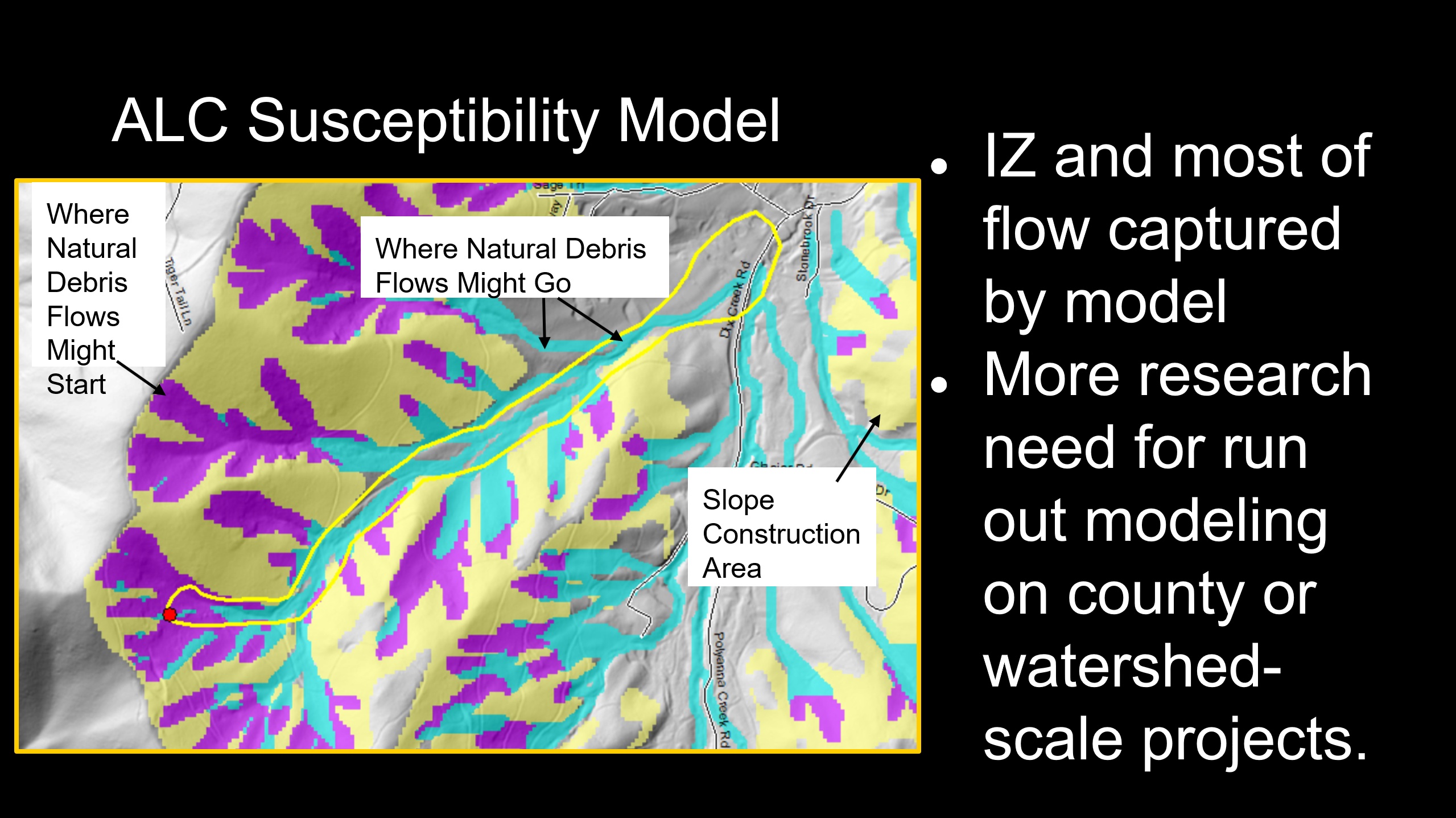
Once the geologic details that can produce landslides are understood (slope shape, slope steepness, soil type, etc.), models of potential landslide hazard zones can be developed. As Jennifer’s talk shows, the overwhelming majority of Helene’s landslides came from mapped hazard areas, but not every hazard area produced a landslide…this time. Hazard mapping can show mountain residents areas that are potentially dangerous is storms (don’t worry; it’s not everywhere-not even close) and help with decision making regarding where to live and how to prepare for the next big event.

Improving understanding of where debris flows will go as they move downslope–and how wide they may be–will be a focal point of landslide research in coming years. The teal color shows existing modeling of a debris flow path; the yellow outline shows the actual extent of the affected area.

Philip Prince

Philip’s talk is centered around the geologic details of Helene’s debris flow landslides. Debris flows are fast-moving, fluidized landslides that can travel long distances very quickly. Often called “mudslides,” debris flows actually carry huge amounts of rock and boulder debris and tremendous numbers of trees, so a debris flow impact is much more damaging than what might result from mud alone.

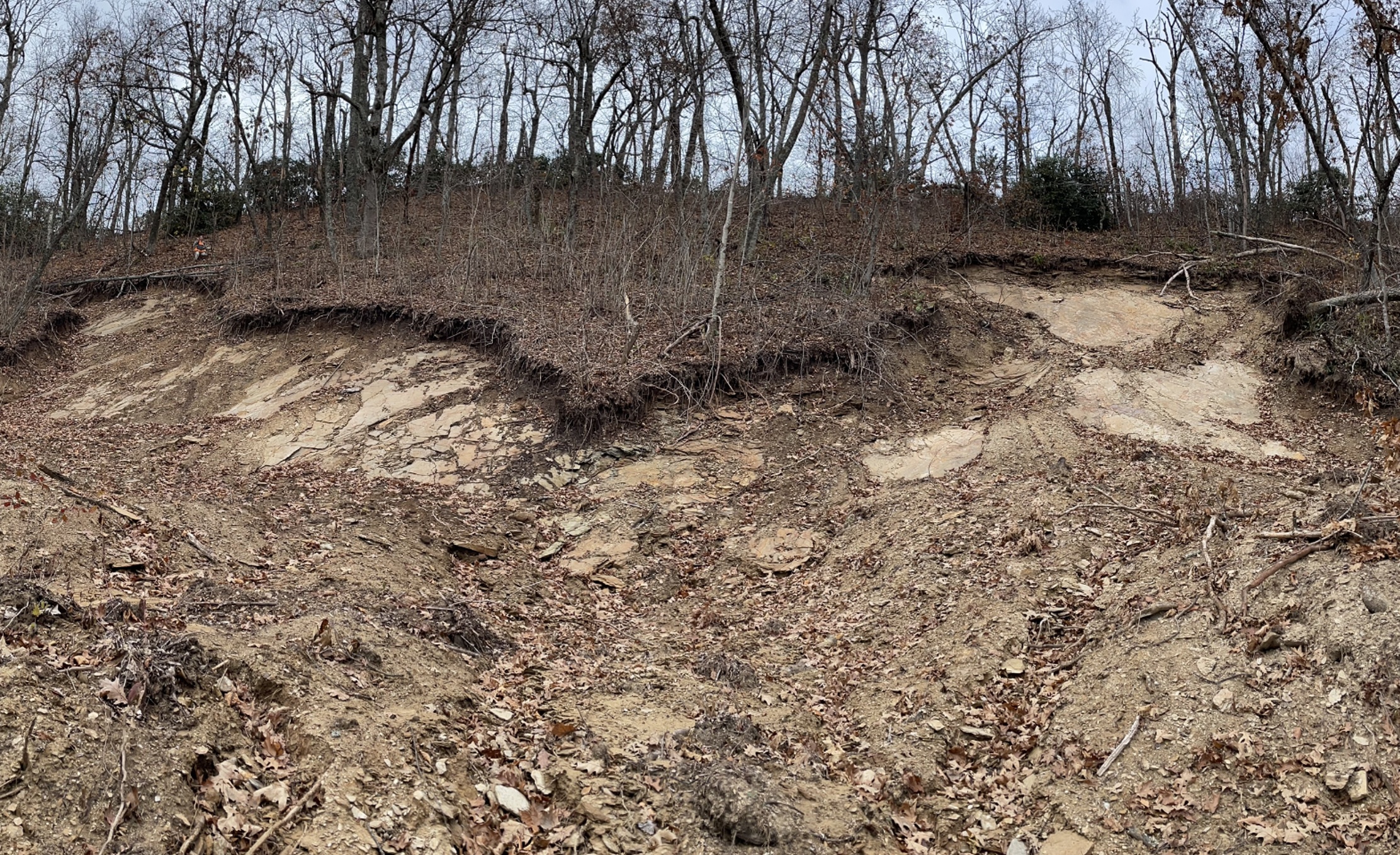
A debris flow conceptual model (top) attempts to illustrate the thin soil “birthplace” of many western North Carolina debris flows. Starting as small landslides which fluidize due to soil saturation, debris flows pick up more and more material moving downslope. The lower photography shows what a debris flow starting point (initiation zone) looks like in the field. Note the smooth bedrock surface exposed by the initial slide.

Philip illustrates where debris flows start in the landscape and how they accumulate so much material on their path downslope. A large debris flow could cover a football field with a few feet of mud, rocks and trees, but even small debris flows are surprisingly destructive. By understanding what type of geologic materials and slope settings produced debris flows during Helene, we can better understand what areas may be hazardous in the next event. Planners can also what parts of the landscape may be more susceptible to landslides when disturbed for building, as well as what areas at the foot of the mountains might be reached by debris flows.

This soil consisting of stacked, shingled rock fragments doesn’t look like much, but it is actually the material which slid to initiate one of the deadly Craigtown debris flows in Fairview, North Carolina. Understanding the distribution and behavior of soils like this is critical to improving understanding of potential debris flow behavior.

Understanding debris flow landslides in the southern Appalachians

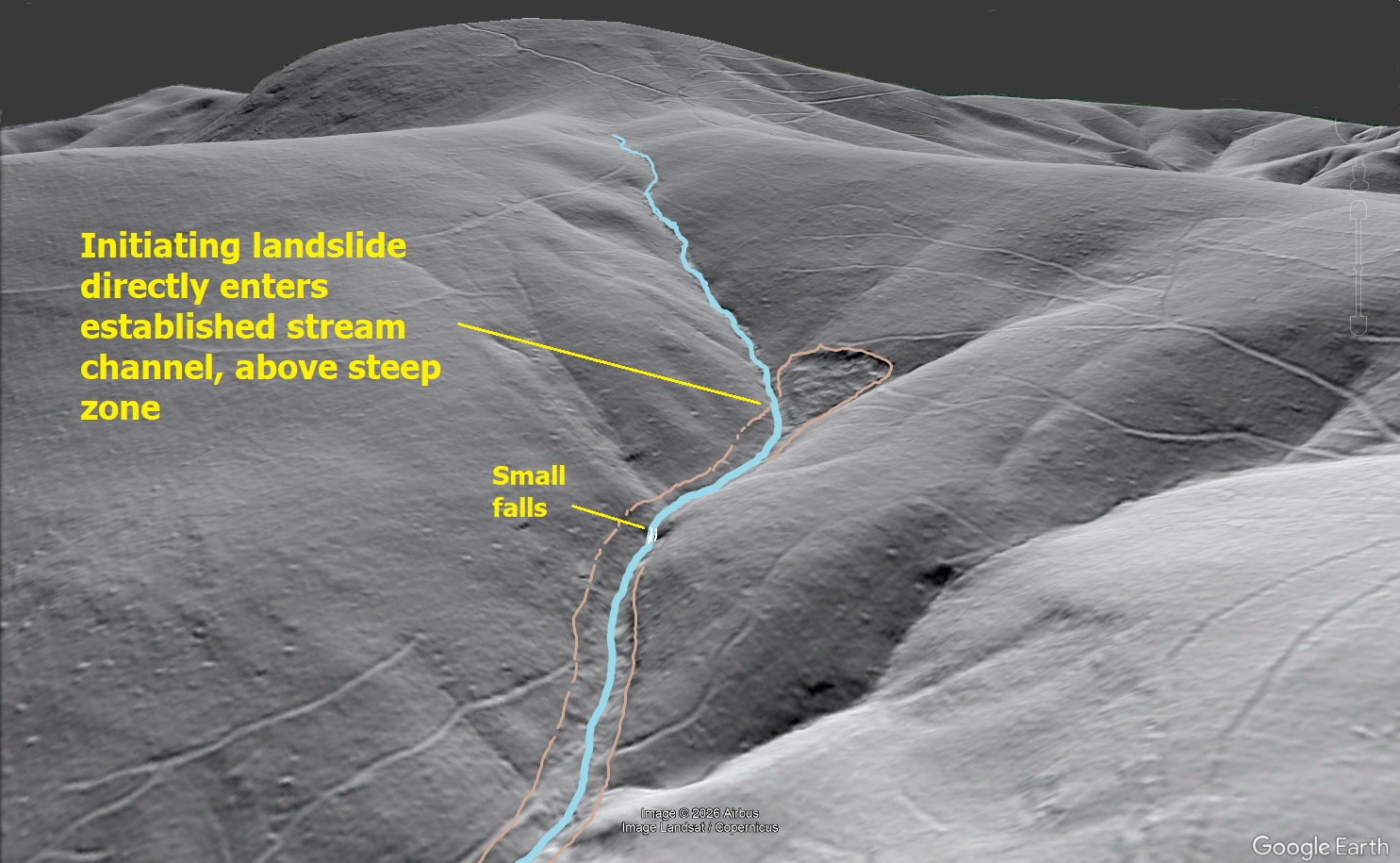
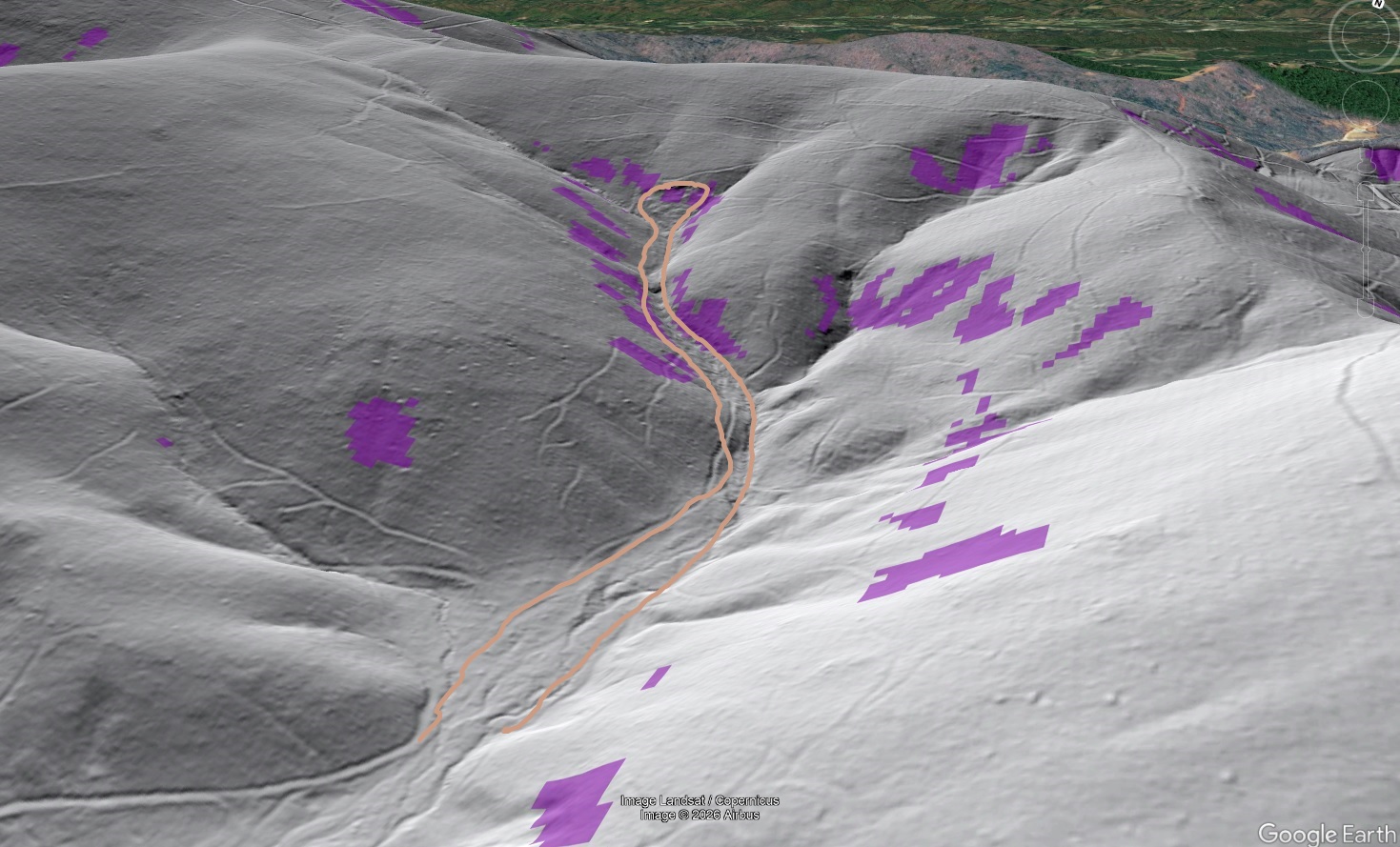
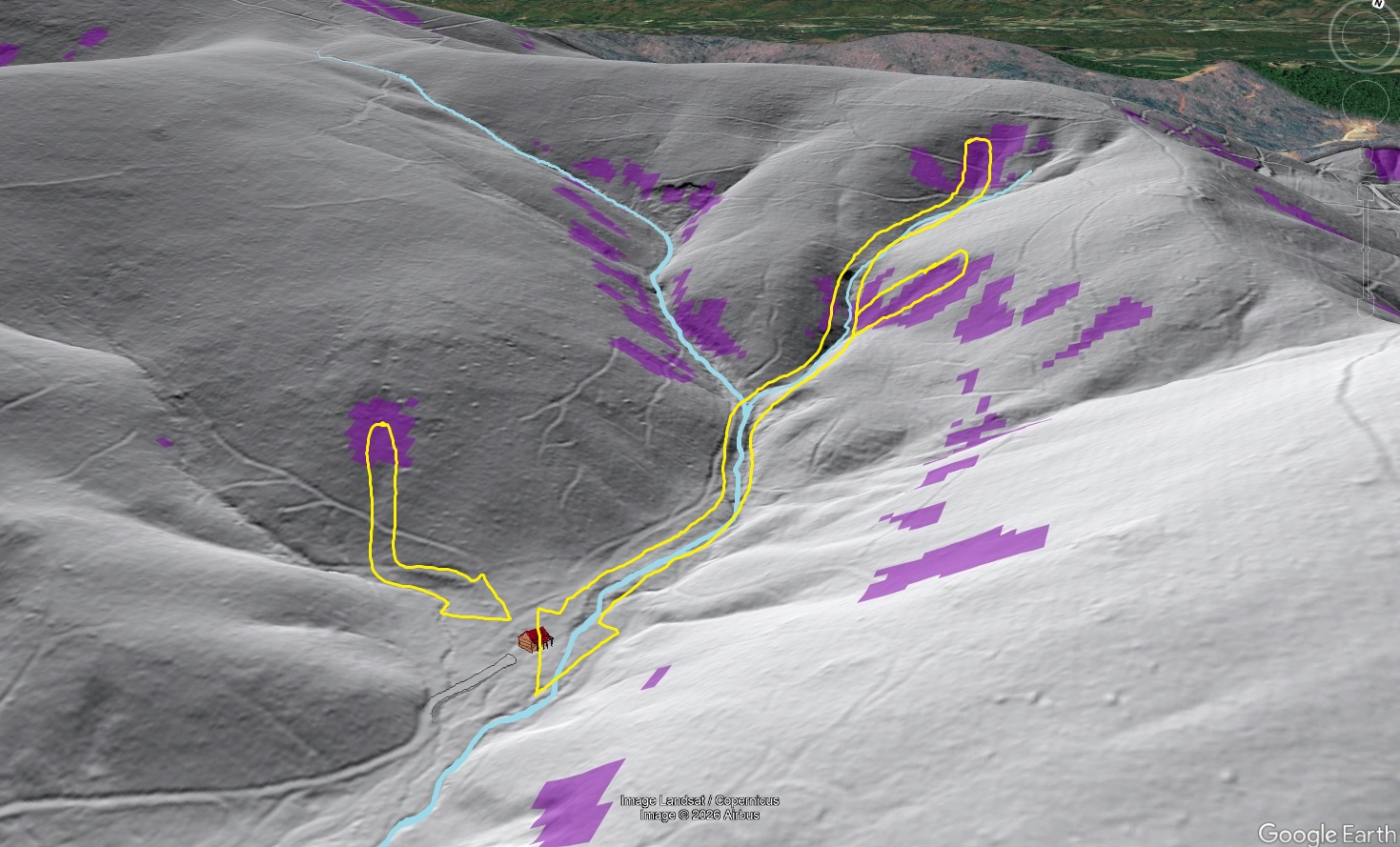
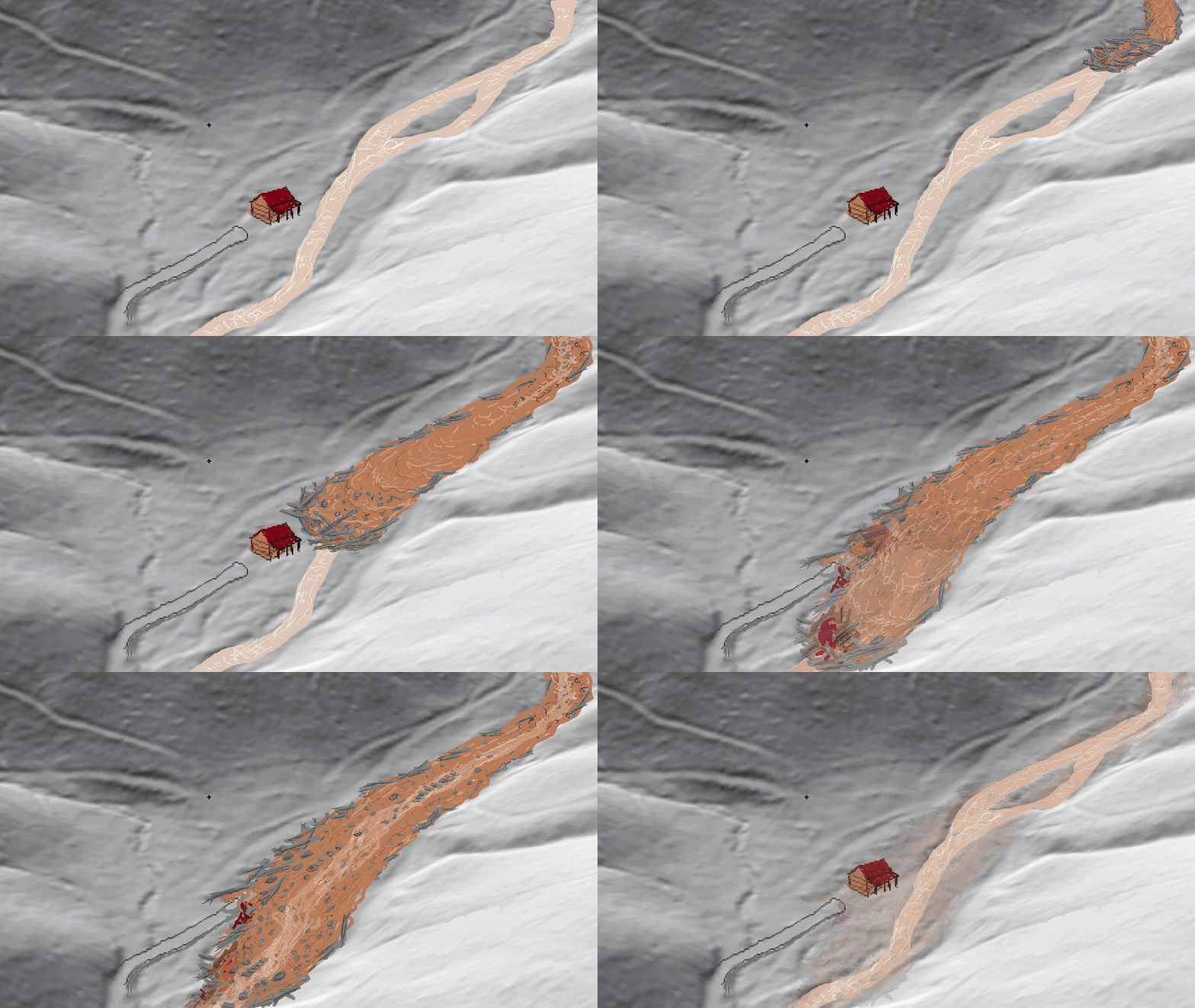
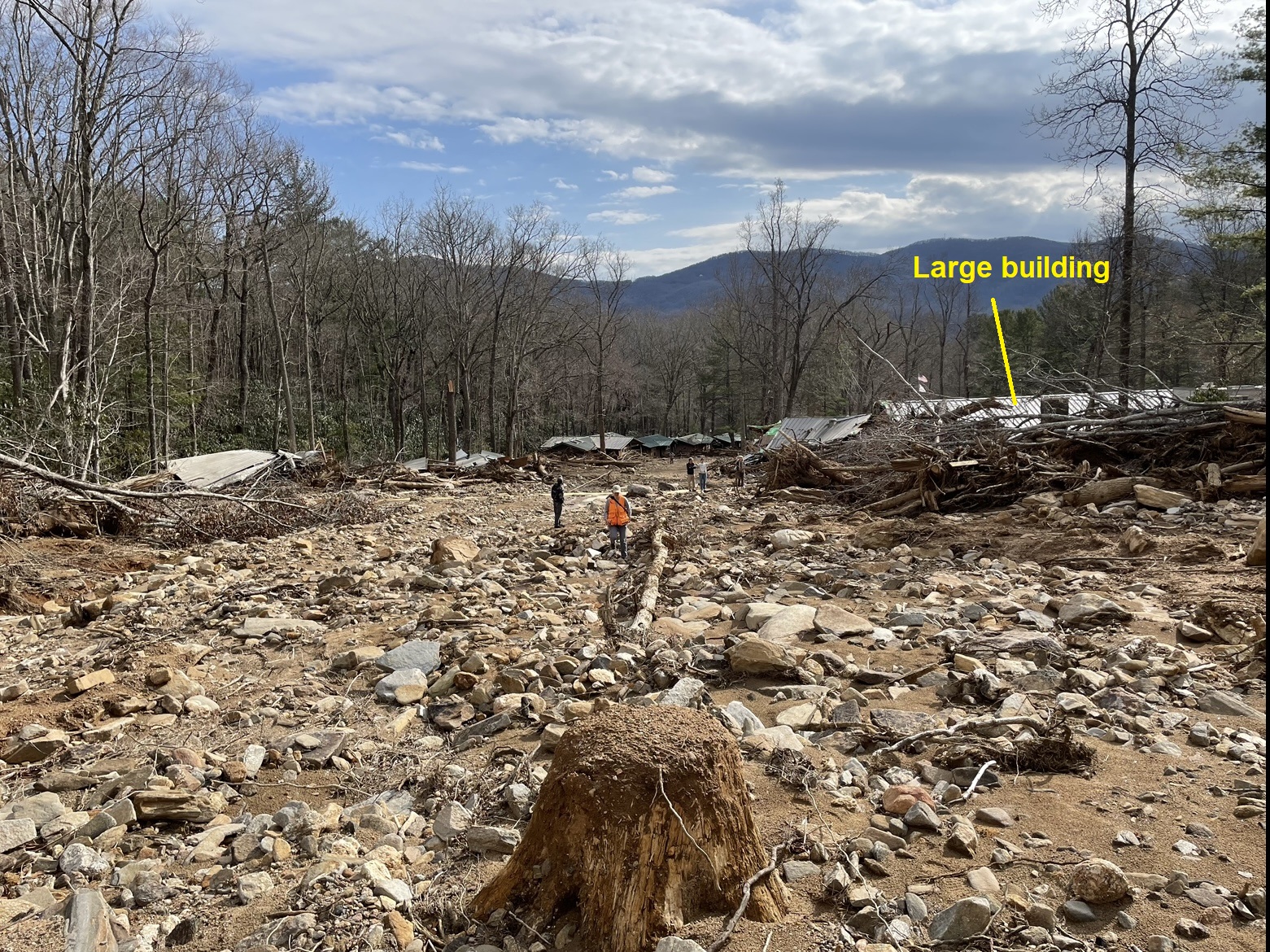
Before Helene’s remnants passed through western North Carolina, the boulder-strewn area in the photo above was covered with trees and buildings. A small stream flowed behind the wrecked buildings on the left of the photo. The damage seen here occurred suddenly on the morning of Friday, September 27, 2024, as a huge wave of boulders, trees, and mud surged down the small stream’s channel. This wasn’t a flash flood–it was a debris flow, a type of fast moving, fluidized landslide associated with heavy rainfall. The extent of the damage from the debris flow is visible in the before/after GIF below. The photo above was taken near the top of the GIF images, looking towards their bottom. The large building labeled above is visible near the bottom of the GIF images.

The small stream is visible trickling through the damage swath; water flooding alone from a stream this small could never approach the level of damage caused by the debris flow. Fortunately, no one was seriously injured in this particular debris flow, but many lives were lost in similar events elsewhere during Helene. Understanding these particularly dangerous landslides is a big part of storm safety in southern Appalachia. So, what are debris flows, where do they start, and what makes them so dangerous?

What are debris flows?

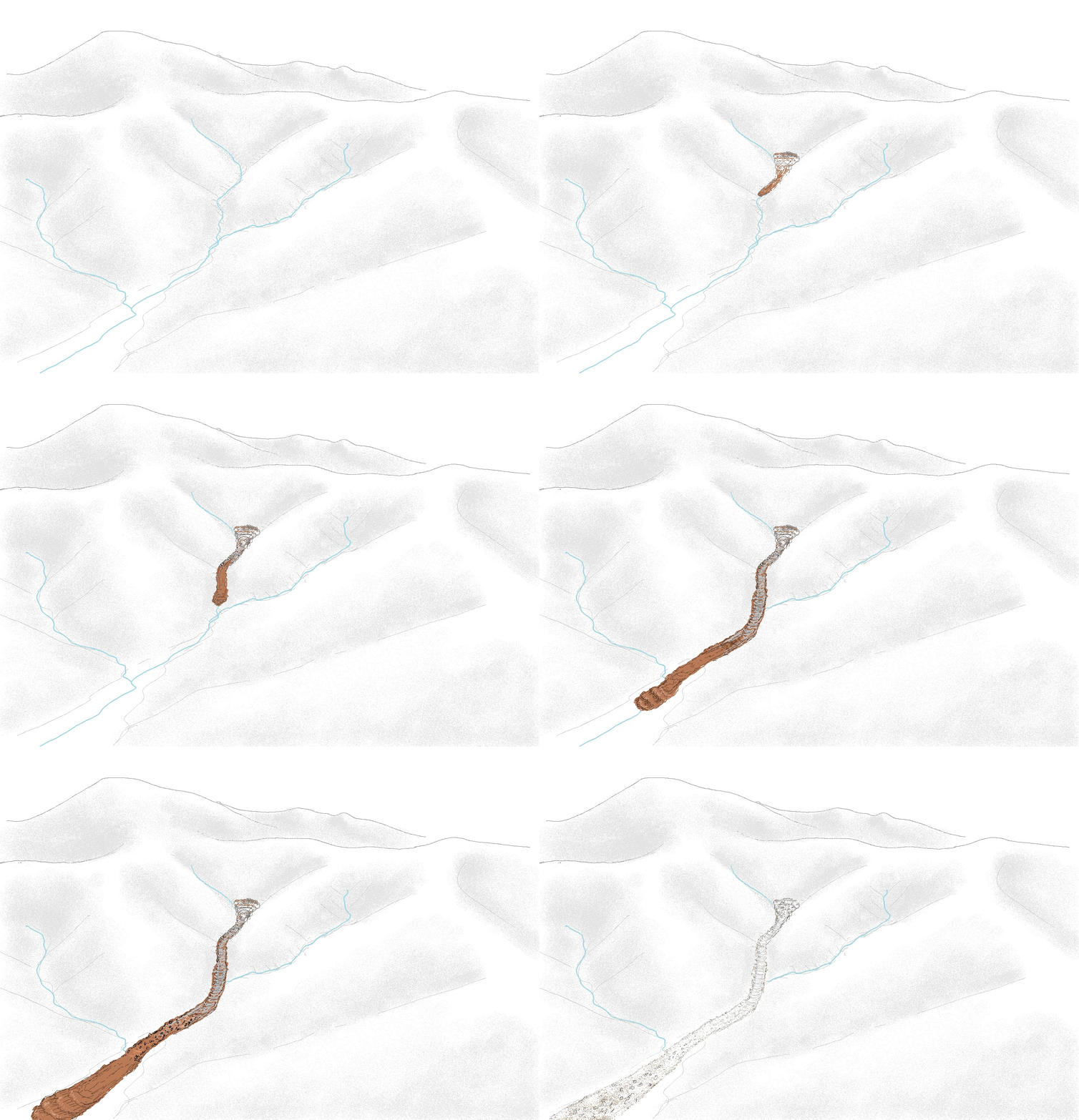
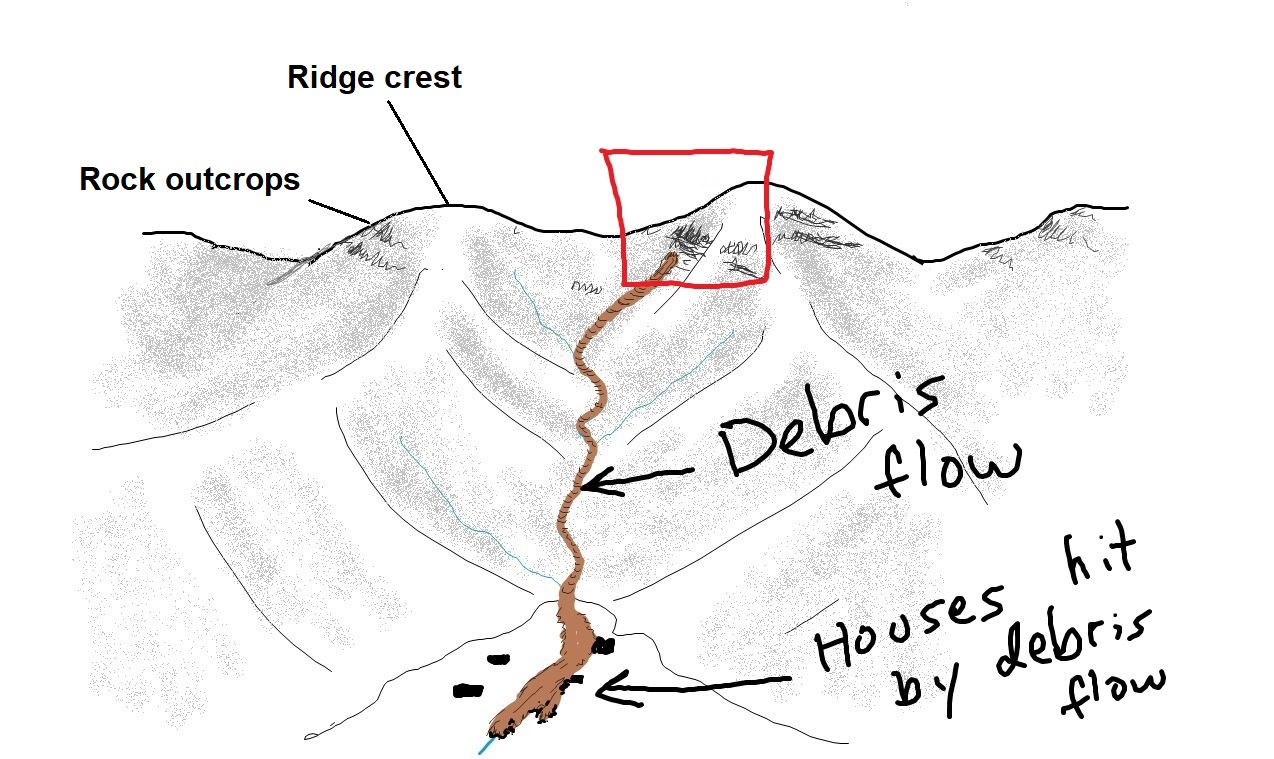
Debris flows are fast-moving, highly mobile, fluidized landslides transporting saturated soil, boulders, and trees downslope. They are specifically associated with saturated soil, which results from heavy rainfall in our region. Debris flows move like a liquid but contain large amounts of solid material–65% solids (rock, soil, and wood) is an average composition, with the rest of the flow volume being water mixed into the soil and rock. Often called “mudslides,” debris flows also carry large trees and boulders. Because of their solid content, debris flows are approximately twice as dense as water, so they hit with destructive force. They follow ravines and small stream channels downslope due to their fluid consistency, spreading over wider areas at the base of slopes until they lose their momentum. The sketch below gives a general idea of a debris flow’s start-to-finish journey downslope, from its beginning in a steep hollow to its damaging end on flatter ground at the base of the mountain.

Where and how do debris flows start?

Debris flows frequently start in steep hollows, or slightly concave slope areas, above the headwaters of small streams. They can also begin on road embankments, or any other landscape feature that can initiate a small landslide on steep ground. Debris flows are specifically associated with heavy precipitation and saturated ground. When a landslide starts in saturated soil, it liquefies and accelerates. When the liquefied landslide hits the saturated soil in its path, this soil liquefies as well and is added to the debris flow. Much like a snowball, debris flows accumulate more and more debris moving downslope, adding to their volume and destructive power. The GIF below shows the basic idea of debris flow initiation in an area like the one indicated by the red box in the sketch above. Note that the debris flow starts in rocky soil beneath a cliff, where rock fragments have accumulated to the point of instability. Due to saturation, once the slide starts, it liquefies, and then liquefies the soil in its path.

How do debris flows move?

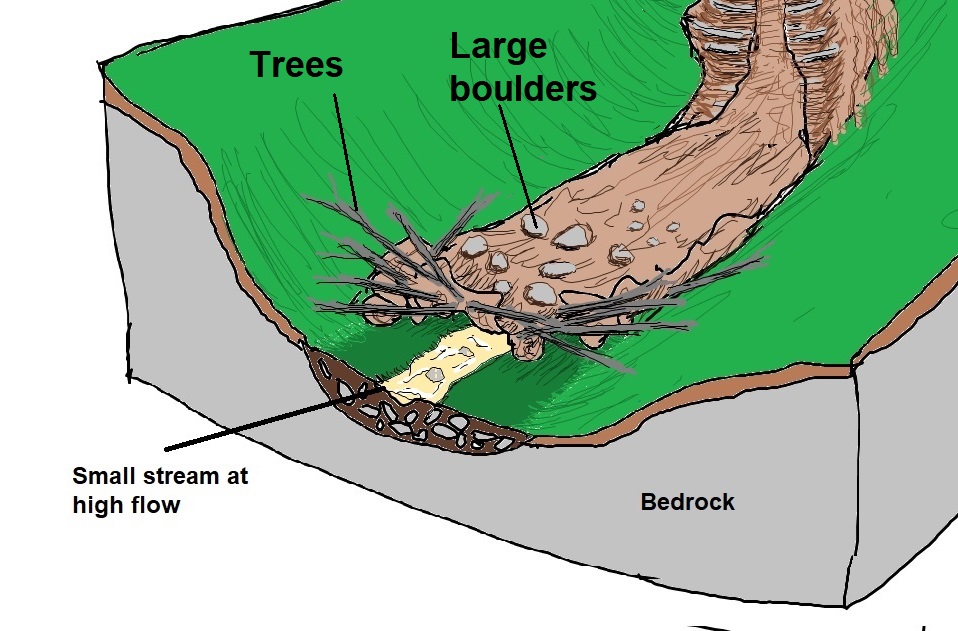
Debris flows follow ravines and stream channels due to their liquefied condition, typically scouring large amounts of soil and stream sediment on their way down. Moving within the stream channel keeps the flow confined and intact. Collisions between soil and rock particles help keep the flow liquefied. A confined, thicker flow also loses less of the water trapped within it. Debris flows can move very quickly, often at speeds of 20 mph or more. They frequently run up onto the slope on the outsides of bends due to their speed. Their width greatly exceeds the width of the stream or creek whose channel they follow. The conceptual sketch below illustrates the scouring process as well as debris flow size relative to the “usual” stream in the channel, even during high water flow.

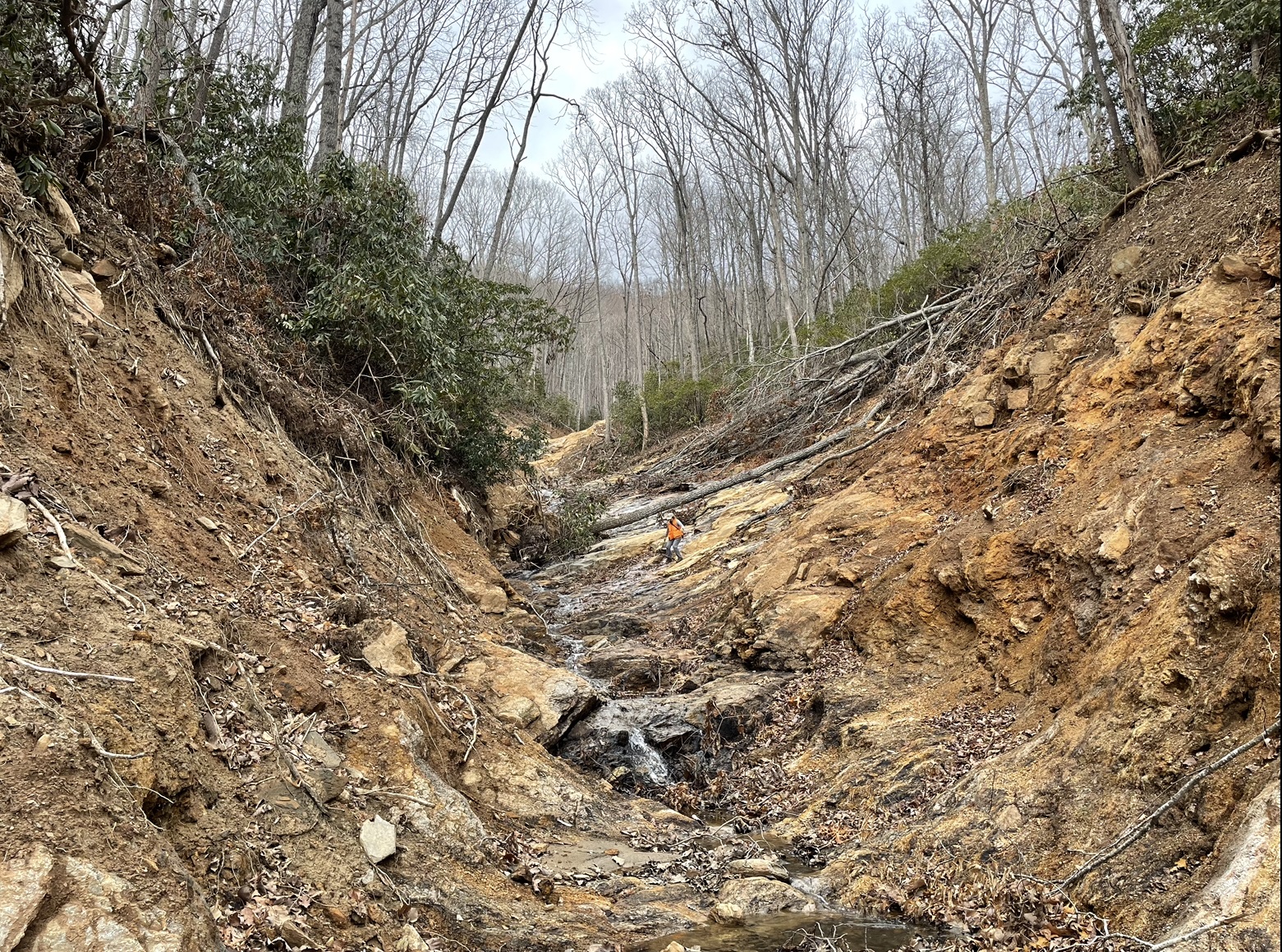
The scouring created by debris flows can be quite impressive; it greatly exceeds the potential for water erosion by small headwater streams. The picture below (taken upslope of the first photo in this post) gives an idea of what the effects of the scouring look like.

The leading edge of the debris flow contains trees and larger boulders picked up by the debris flow through its scouring action. Smaller cobbles and mud trail behind. Even small debris flows can transport surprisingly large boulders and trees due to the density of the fluidized soil (it “floats” boulders), making a debris flow strike on a structure incredibly destructive.

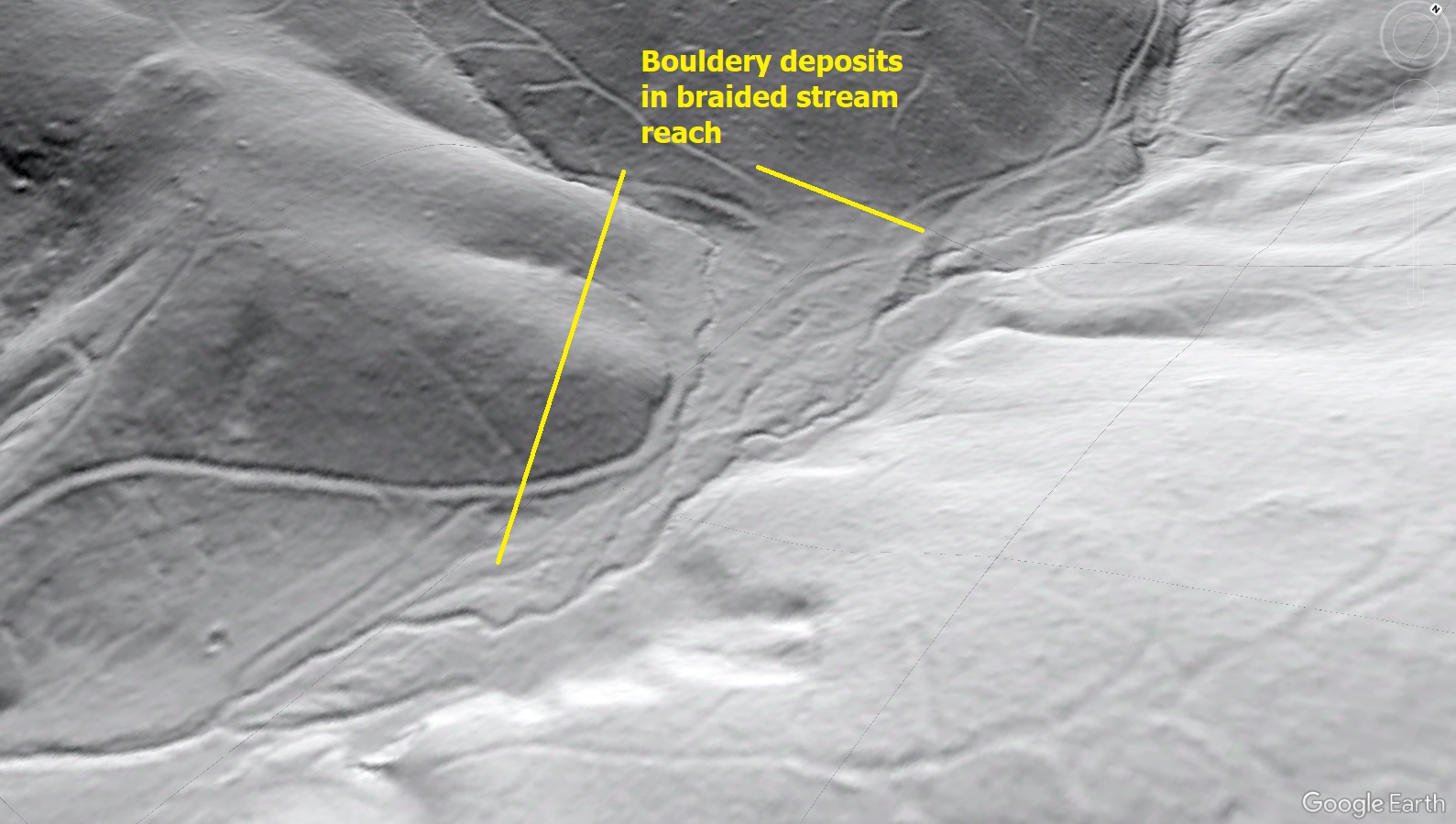
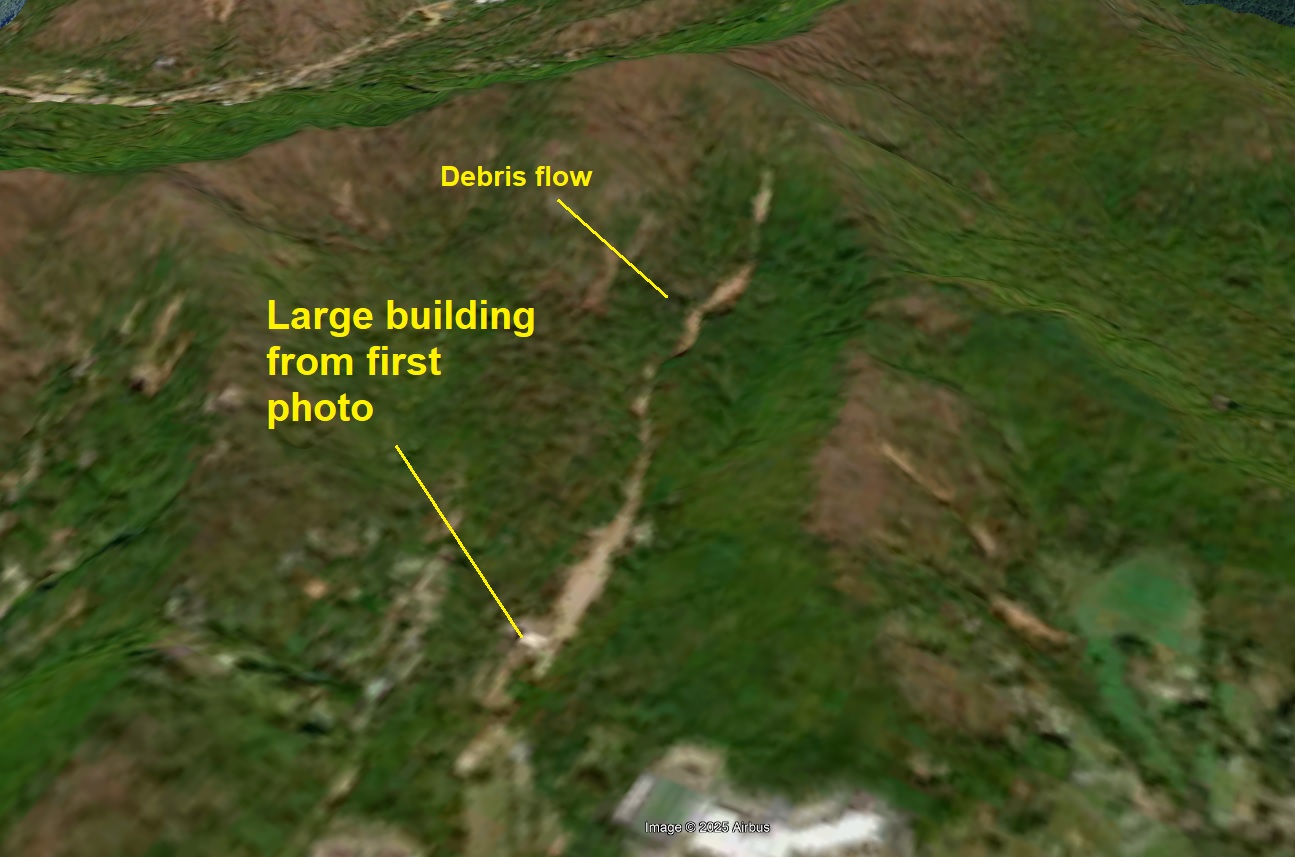
When debris flows exit tighter channels or ravines onto flatter ground, they often spread out, but remain mobile and destructive for some distance. In western North Carolina, many tight stream channels open onto flatter areas at the base of the steep slope. These flatter areas are older, accumulated debris flow deposits. The GIF below shows debris flows exiting a stream valley and spreading onto a flat deposit area, where buildings are destroyed. Though an unpleasant thought, this sequence of events played out many times during Helene (as well as during many other storms in our region’s history). The satellite photo below the GIF shows a bird’s eye view of the debris flow where the first photo in the post was taken.

Debris flow deposits are an indicator that an area can experience debris flows and should be developed cautiously, if at all. This often seems counterintuitive, as the flatter slopes suggest safety from landslides. In reality, these flat deposit areas are a main indicator of possible debris flow hazard. People already living in such areas should be aware of the hazard during heavy rainfall. In southern Appalachia, about 5 inches of rain over 24 hours produces conditions necessary to make debris flows possible.

This is the first post in a series of Helene-related posts discussing landslide events during the storm. Posts will be a combination of remote sensing interpretation and first-hand, on-the-ground experience. Our goal is to increase understanding of what happened during this event and help folks plan for future hazard.

Additional discussion of how debris flows fluidize can be found in this video. It’s an interesting process that isn’t fully understood, but the basics are outlined here in greater detail.